
Written by Teerth Busa: Health & Fitness Content Writer
Teerth Busa researches exercise, fitness, nutrition, mental well-being, and healthy lifestyle topics using reputable health organizations and scientific sources. His content is written to make health and fitness information simple, practical, and easy to understand.
Suppose you have 30 free minutes a day. Should you spend them on a brisk walk or on squats and push-ups?
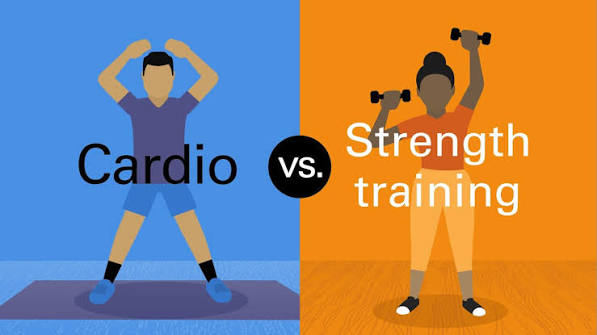
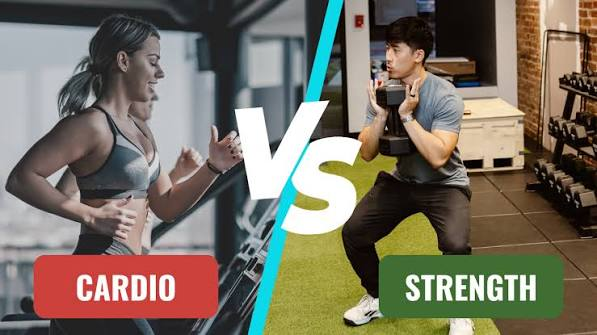
The short answer: neither wins everywhere. Cardio (also called aerobic exercise) and strength training do different jobs, and major health guidelines recommend both. If you truly have to choose one for now, the better pick depends on your goal. Cardio has the stronger evidence for reducing body fat, while strength training is the one that builds muscle and strength. This article explains the difference, what the research does and doesn’t show, and how to build a simple routine without a gym.
Key takeaways
- The WHO recommends that adults do aerobic activity every week and muscle-strengthening activity on at least two days.
- For fat loss, one well-known trial found aerobic training more efficient than resistance training, but only strength training increased lean (muscle) mass.
- Observational research links about 30 to 60 minutes of strength training a week with a lower risk of early death. That is an association, not proof.
- You don’t need a gym. Brisk walking, bodyweight exercises and a resistance band are a legitimate start.
- Starting small and building up matters more than choosing the perfect programme.
What each type of exercise actually does
Cardio: training your heart and lungs
Cardio is any rhythmic activity that raises your heart rate and breathing for a sustained period: brisk walking, cycling, swimming, jogging, dancing, climbing stairs, or playing badminton or football. It trains your heart, lungs and the muscles that use oxygen over long periods, so everyday efforts such as climbing a flight of stairs start to feel easier. To see how this protects your cardiovascular system in more detail, read how exercise protects your heart.
A simple way to judge intensity is the talk test. At moderate intensity you can talk but not sing. At vigorous intensity you can only say a few words before needing a breath.
Strength training: loading your muscles
Strength training (also called resistance training) means making your muscles work against resistance so they adapt and get stronger. That resistance can come from body weight (squats, push-ups, glute bridges), a resistance band, dumbbells, a backpack with books in it, or gym machines. Sessions are usually shorter and more intermittent than cardio: you work a muscle group, rest, and repeat.
A quick comparison
| Cardio | Strength training | |
|---|---|---|
| Main purpose | Heart, lung and stamina fitness | Muscle size, strength and function |
| Typical examples | Brisk walking, cycling, swimming, jogging | Squats, push-ups, band rows, weights |
| Equipment | Usually none | None to minimal for beginners |
| Effort feels like | Steady, breathing harder | Short, hard efforts with rest between sets |
What the official guidelines recommend
The World Health Organization’s 2020 guidelines are the most widely used reference. For adults aged 18 to 64, the WHO 2020 guidelines on physical activity and sedentary behaviour recommend:
- 150 to 300 minutes of moderate-intensity aerobic activity a week, or 75 to 150 minutes of vigorous-intensity activity, or an equivalent mix; and
- Muscle-strengthening activities at moderate or greater intensity, involving all major muscle groups, on two or more days a week.
Two other points in the guidelines are worth remembering. Some activity is better than none, and people who aren’t meeting the targets should start with small amounts and increase gradually. The WHO also states that the benefits of being active outweigh the potential harms, and that those harms can be managed by building up slowly. If you want the complete recommendations for every age group, the full WHO guideline document is free to read.
Notice the framing: the guidelines treat these as two parts of one weekly pattern, not as rival options.
What research says, goal by goal
For long-term health
A 2022 meta-analysis in the British Journal of Sports Medicine pooled 16 prospective cohort studies. People who did muscle-strengthening activity had a 10 to 17 percent lower risk of death from any cause, and of cardiovascular disease, total cancer and diabetes, than those who did not. The largest reduction appeared at roughly 30 to 60 minutes of strength training a week. Beyond that, the benefit did not keep rising, and the curve even flattened or turned upward for some outcomes, so the effect of higher volumes is unclear.
When strength and aerobic activity were combined, the lower risk was bigger: about 40 percent lower for death from any cause, 46 percent for cardiovascular disease and 28 percent for cancer, compared with doing neither.
Please read this with care. These were observational studies. People who lift weights may also differ in other ways, such as diet, income and general health habits, so the numbers show association, not that strength training caused the lower risk. The authors themselves noted that the number of studies was limited and called for research in more diverse populations.
The WHO’s review of the evidence also links regular physical activity in general to lower all-cause mortality, cardiovascular mortality, high blood pressure and type 2 diabetes, along with better mental health and sleep.
For losing body fat
The best-known direct comparison is the STRRIDE AT/RT trial from Duke University, published in 2012. Researchers randomly assigned sedentary adults with overweight or obesity to eight months of aerobic training, resistance training, or both. Results for the 119 participants in the analysis (see the full text of the trial):
- Aerobic training and the combined programme reduced body mass and fat mass more than resistance training alone.
- Resistance training and the combined programme increased lean body mass; aerobic training alone did not.
- The combined programme did not reduce fat significantly more than aerobic training alone, though it took roughly double the time.
The authors concluded that, balancing time against benefit, aerobic exercise looks like the most efficient option for reducing fat mass, while resistance training is needed to increase lean mass.
A few caveats keep this in proportion. It was a single trial in one population (middle-aged, sedentary adults with overweight or obesity), so it can’t tell us everything about younger people or people already active. It measured body composition, not strength, fitness or other health markers. And what you eat strongly affects fat loss too.
The trial also shows why the bathroom scale can mislead: the resistance-training group’s weight didn’t fall because their lean mass went up.
For building muscle and staying strong
If your goal is more muscle or greater strength, strength training is the answer. In the trial above, lean mass rose only in the groups that lifted. For older adults, the WHO specifically recommends varied activity that emphasises balance and strength at moderate or greater intensity on three or more days a week, to improve function and prevent falls.
So which one should you choose?
The best programme is the one you’ll actually keep doing. These situations may help:
- You have very little time. Pick whichever you’ll do consistently, and aim to add the other in short sessions. Even two 20-minute strength sessions a week count toward the guideline.
- Your main goal is fat loss. Make cardio and daily movement the base, and add strength training to preserve and build muscle. Remember that food matters too.
- You want to get stronger or have felt your strength slipping. Prioritise strength sessions, and keep walking or other light cardio for heart health.
- You’re over 65. The WHO recommends adding balance and strength work on three or more days a week. Ask a doctor or physiotherapist about a safe starting point if you have joint problems or have had falls.
- You’re pregnant, recently gave birth, or live with a long-term condition. Both are encouraged by the WHO in general, but the right type and intensity depends on your situation, so check with your healthcare provider first.
A simple beginner week (no gym needed)
This is an example to adapt, not a prescription. If it looks like too much, cut it in half and build up. If you’ve been inactive, even 10 minutes at a time is a legitimate starting point.
| Day | Activity |
|---|---|
| Monday | Strength: 25 to 30 minutes of full-body bodyweight exercises |
| Tuesday | Cardio: 30 minutes of brisk walking |
| Wednesday | Rest or easy stretching |
| Thursday | Strength: 25 to 30 minutes, same or slightly harder exercises |
| Friday | Cardio: 30 minutes of cycling, swimming, or a brisk walk |
| Saturday | Something enjoyable and active: a longer walk, a game, dancing, a swim |
| Sunday | Rest |
A beginner strength session might include squats (to a chair if needed), incline push-ups against a wall or table, glute bridges, step-ups on a low stair, and rows with a resistance band or a loaded backpack. Do 2 to 3 sets of 8 to 12 repetitions, with a minute’s rest between sets. Choose a level where the last few repetitions feel hard but your form stays good. If you later want heavier resistance, this full-body dumbbell workout for beginners is a good next step.
Progress gradually. Add a few minutes to your walks or a few repetitions to your sets every week or two, rather than jumping up suddenly. Sudden big increases are a common cause of aches and quitting.
Recovery counts. Muscles adapt between sessions, not during them. Regular sleep and a balanced diet with enough protein (dal, chickpeas, curd, paneer, eggs, fish or chicken, tofu, nuts and seeds, depending on what suits you) support the process. Our guide to foods that support muscle recovery has simple, affordable options. You don’t need supplements to start.
Common mistakes and misconceptions
- “Strength training is optional.” The WHO guideline includes it for all adults, and the pooled data above suggest it adds benefit independent of aerobic activity.
- “More is always better.” Beyond a modest amount, extra strength training hasn’t been shown to add benefit in observational data. That doesn’t prove harm, but it’s a reason not to push yourself into exhaustion.
- “Cardio is the only way to lose weight.” Cardio was more efficient for fat loss in the trial above, but the combined programme brought extra muscle, which matters for strength and function.
- Judging progress by the scale alone. Gaining muscle while losing fat can leave your weight unchanged. Notice how clothes fit, how stairs feel, and how much you can lift.
- Skipping technique. Learn the movement with light resistance before adding load. A qualified trainer or physiotherapist can check your form.
- Expecting quick transformations. Results vary from person to person, and no programme can promise a particular timeline.
When to speak to a doctor first
Talk to a healthcare professional before starting or increasing exercise if you have a heart condition, high blood pressure, diabetes, joint or back problems, are pregnant or recently gave birth, are recovering from surgery or illness, or have been inactive for a long time and have other health concerns. Stop and seek medical help if you get chest pain or pressure, severe breathlessness, dizziness or fainting during exercise.
Frequently asked questions
Can I do cardio and strength training on the same day?
Yes. Many people do. If you want to put more effort into one, do that first when you’re freshest, or split them into separate sessions. For beginners, how consistently you train matters more than the order.
Is walking enough?
Brisk walking counts as moderate-intensity cardio, so it can help you reach the weekly aerobic target. It doesn’t replace muscle-strengthening work, which the guidelines recommend on at least two days a week. For a simple way to add light cardio to your day, see what the evidence says about walking after meals.
Do I need a gym?
No. Bodyweight movements, a resistance band and a flight of stairs are enough to start. A gym becomes useful when you need heavier loads to keep progressing.
Which is better for weight loss?
In the Duke trial, aerobic training reduced fat mass more efficiently than resistance training alone, and adding strength work preserved and built muscle. Diet, sleep and daily activity also matter, and individual results differ.
How long before I notice results?
It varies. Many people feel their energy and stamina improve within a few weeks, while visible body changes usually take longer. Be wary of anyone promising a precise timeline.
Is strength training safe as I get older?
The WHO recommends strength and balance training for older adults, partly to prevent falls. Start with light resistance and good technique, and ask a doctor or physiotherapist for advice if you have health conditions.
Conclusion
The question “cardio or strength training?” is a bit like asking whether you need food or water. Cardio looks stronger for reducing body fat, and strength training is the one that builds muscle and strength. Guidelines ask for both because they complement each other.
A reasonable next step: this week, add one 20 to 30 minute walk and one short bodyweight session to your routine, and keep it for a few weeks before changing anything. On busy days, simple daily habits to avoid sitting too long can fill the gaps between workouts. Check with a doctor first if any of the health circumstances above apply to you.