
Written by Vardan Patel
Co-Creator & Health and Fitness Content Creator at FitHub 365
Vardan combines his personal experience with exercise and healthy lifestyle habits with research from reputable health organizations and scientific sources to create practical, beginner-friendly health and fitness content.
Key takeaways
- Protein is a basic building material for muscle, skin, enzymes and hormones, and your body needs it every day. The current hype is about marketing and fitness culture more than a new discovery.
- Official guidance for most healthy adults is modest. India’s national guidelines put it at about 0.83 g per kg of body weight daily.
- Many people need more attention to protein quality and spread across meals, not more powder. This applies especially to older adults, vegetarians and anyone with a cereal-heavy diet.
- Research on supplements shows a ceiling: beyond roughly 1.6 g per kg a day, extra protein did not add more muscle in trials of people lifting weights.
- Supplements can be convenient, but whole foods cover most needs. Anyone with a kidney condition or other medical issue should ask a professional before raising intake.
Why Protein Has Become So Important in Modern Nutrition
Walk through any supermarket today and you’ll find protein on biscuits, breakfast cereal, yogurt, chips and even water. Ten years ago, most of these products said nothing about it. So what changed: did our bodies suddenly need more, or did the labels just get louder?
The honest answer is a bit of both. Protein really is essential, and many people eat less of it than they should. But the recent surge also comes from gym culture, social media and food marketing. This article separates the two so you can decide what actually applies to you.
What protein does in your body
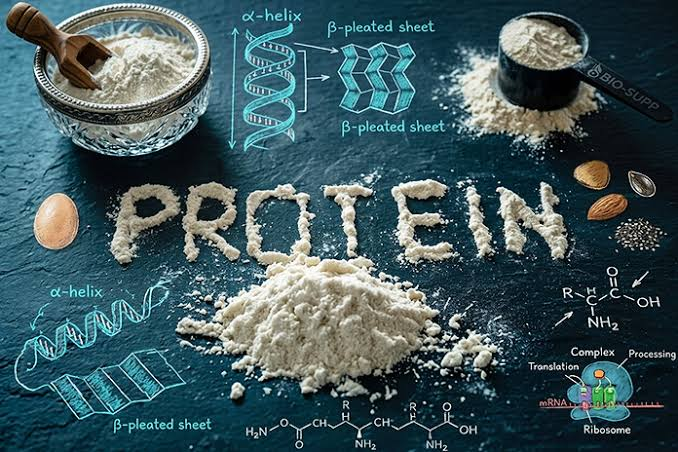
Protein is made of smaller units called amino acids. Your body uses them to build and repair muscle, make enzymes that run chemical reactions, produce some hormones, and support skin, hair, nails and immune cells. Nine of these amino acids are called “essential” because your body can’t make them, so they must come from food.
Unlike fat or carbohydrate, protein isn’t stored as a dedicated reserve. Your body constantly breaks proteins down and rebuilds them, so a steady supply from meals matters. That’s the reason nutrition advice talks about protein every day rather than as something to “catch up” on.
Why it suddenly seems to be everywhere
Several things came together:
- Strength training went mainstream. Gyms, home workouts and online fitness communities made muscle building a normal goal, and protein is closely tied to it.
- Weight-management interest. Protein tends to keep people feeling full for longer, which makes it popular in weight-loss conversations. Fullness varies from person to person, though, and it isn’t a guarantee.
- Ageing populations. People are living longer, and keeping muscle strength in later life has become a serious health topic.
- Marketing. Brands noticed that “high protein” sells. A label claim doesn’t always mean a product is nutritious overall. A sugary bar with added protein is still a sugary bar.
It also helps to know that protein concern isn’t only a rich-country issue. In India, the national dietary guidelines list the recommended intake at 0.83 g per kg of body weight per day, while the estimated average intake is 0.66 g per kg. That gap suggests many people aren’t reaching even the basic target. The reasons are usually affordability, cereal-heavy meals and uneven distribution within households, not lack of interest. dtnext

How much protein do you actually need?
For most healthy adults, official recommendations are fairly low compared with what fitness influencers suggest. The commonly used international figure is about 0.8 g per kg of body weight per day, and India’s figure is slightly higher at 0.83 g.
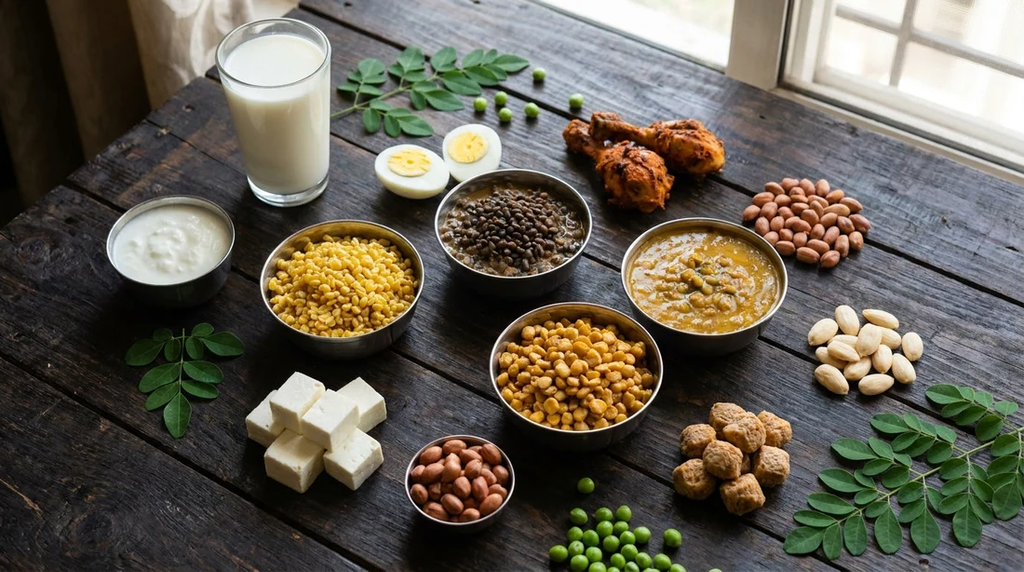
A simple example: someone weighing 60 kg would multiply 60 by 0.83 and get roughly 50 g of protein a day. That’s not a huge amount. It could come from a glass of milk, a bowl of dal, a couple of rotis with curd, and an egg or a handful of nuts.
Remember that these numbers are the amount needed to avoid deficiency in typical healthy adults. They aren’t a personal prescription. Some people need more:
- Older adults, who gradually lose muscle and may benefit from more protein alongside strength exercise.
- People who train regularly, especially with weights.
- Pregnant or breastfeeding women.
- People recovering from illness or surgery, under medical guidance.
What the research says about exercise
The best-known evidence comes from a 2018 systematic review and meta-analysis of randomised trials. It found that protein supplementation significantly improved muscle strength and size during prolonged resistance training in healthy adults, with no extra gain in fat-free mass once total intake passed about 1.6 g per kg a day. The same analysis noted that the benefit shrank with increasing age and was larger in people who were already trained. nih
Two practical points follow. First, the benefits depend on actually doing resistance training; protein alone doesn’t build muscle. Second, there’s a ceiling. Eating well beyond that level didn’t give extra muscle in these trials, so more is not automatically better. Note that these studies focus on supplementation in people lifting weights, so they can’t be stretched to claim effects for everyone.
Protein quality: why the source matters
Not all protein foods behave the same way. Animal foods such as eggs, milk, curd, fish and chicken contain all nine essential amino acids in useful proportions. Many plant foods contain less of one or two of them. Cereals, for instance, are lower in lysine, while pulses are lower in methionine.
This doesn’t mean vegetarians struggle. Combining foods across the day works well. A classic Indian example is dal with rice or roti, where the two cover each other’s gaps. Rajma-chawal, khichdi, chana with whole wheat roti, and idli with sambar follow the same logic. You don’t need to combine them in the same meal, as long as your overall diet is varied.
Digestibility also differs. Some plant proteins are absorbed a little less efficiently than animal ones, so people eating entirely plant-based may want a bit of margin in their totals. Pulses, soy, nuts and seeds help.
Practical ways to get enough protein
You don’t need special products to improve your protein intake. Try these:
- Look at breakfast first. Many people eat mostly carbohydrates in the morning, such as tea with biscuits or plain paratha. Adding an egg, curd, besan chilla, paneer, sprouts or a glass of milk can make a real difference.
- Spread it out. Rather than a small dinner and a large chicken portion at night, aim for some protein at each meal.
- Upgrade your dal. Dal made thicker, or served with curd and a vegetable, is a cheap source. Chickpeas, black-eyed peas, lentils and kidney beans are affordable and filling.
- Use snacks wisely. Roasted chana, peanuts, a boiled egg, buttermilk, or a handful of nuts and seeds usually beat packaged “protein” snacks on both price and nutrition.
- Think about what you replace. Swapping refined snacks for protein-rich options can improve the whole diet, not just the protein number.
For different diets:
- Vegetarian: lean on dairy, pulses, soy, paneer, nuts and seeds.
- Vegan: tofu, tempeh, soy chunks, lentils, chickpeas, quinoa and nut butters, with attention to vitamin B12 and a varied plate.
- Non-vegetarian: eggs, fish, chicken and dairy work well, though red and processed meat shouldn’t dominate.
On a budget, eggs, milk, curd, lentils, chickpeas and peanuts usually give the most protein per rupee.
What about protein powders and supplements?
This is where advice gets contested. Supplements are convenient, and the trial evidence above shows they can modestly help muscle gain when combined with resistance training. But they are rarely necessary for ordinary healthy adults eating a varied diet.
India’s 2024 dietary guidelines take a cautious stance. They discourage using protein supplements for muscle building, and cite concerns such as bone mineral loss and kidney damage with prolonged intake of large amounts of protein powders or concentrates. These concerns are a point of debate among nutrition experts, and evidence in healthy people is not as clear-cut as the headlines suggested. Still, the guidance reflects another real issue: product quality. A study reported before the guidelines found inaccurate protein information in 70% of 36 popular supplements tested in India. openfoodfactsmedicaldialogues
A sensible approach is this:
- Try to meet needs through food first.
- If you do use a powder, choose a reputable brand with transparent labelling, and watch for added sugar and unnecessary additives.
- Treat it as a convenience, not a requirement.
- Check with a doctor or registered dietitian if you have any health condition.
Common misconceptions
“More protein always means more muscle.” Not so. Training, sleep, total calories and overall diet all matter, and gains level off at higher intakes.
“Plant protein is useless.” A varied plant-based diet can meet protein needs. It takes some planning, but it is workable.
“High-protein products are automatically healthy.” Check the whole label. Sugar, saturated fat and ultra-processing matter too.
“Protein melts fat.” No food does that. Higher-protein meals may help some people feel full, which can support a calorie balance, but results vary.
Safety and when to ask a professional
For most healthy people, eating protein from normal foods is safe. However, people with kidney disease or reduced kidney function are often advised to limit protein, and the right amount depends on their condition. If you have kidney, liver or metabolic problems, are pregnant, are managing diabetes, or take regular medication, talk to a doctor or dietitian before changing your intake substantially or starting supplements. Children, teenagers and older adults also have different needs and shouldn’t copy adult gym advice.
Frequently asked questions
Can I get enough protein on a vegetarian diet?
Yes, in most cases. Dairy, pulses, soy, nuts and seeds can cover needs when eaten regularly and in variety. Planning matters more than the label “vegetarian.”
Do I need protein powder to build muscle?
No. Resistance training and enough total protein from food are the foundations. Powder can make it easier to reach your target, but it isn’t required.
How do I know if I’m eating too little protein?
There’s no simple home test. Signs such as persistent tiredness, slow recovery or muscle loss can have many causes. A look at what you eat in a typical day, or advice from a dietitian, is more reliable than guessing.
Is it bad to eat protein at every meal?
Not for healthy people. Spreading protein through the day is a common and practical approach.
Does eating more protein harm the kidneys?
For people with healthy kidneys, normal food-based intakes haven’t been shown to cause damage, though guidance on long-term high-dose supplements is more cautious. People with existing kidney problems should follow their doctor’s advice.
Is the protein needed the same for men and women?
Recommendations are expressed per kilogram of body weight, so needs are similar per kg. Pregnancy, breastfeeding, age and activity level change the numbers.
Conclusion
Protein deserves its place in nutrition conversations, but the loudest messages often overshoot the evidence. Most healthy adults need a moderate amount, spread across the day, from a variety of foods. Getting there is often less about powders and more about better breakfasts, thicker dals, regular eggs or curd, and snacks that count.
A good next step is to look at your own plate for a day or two and see where protein is thin. Then change one meal at a time. If you have a medical condition or train heavily, a registered dietitian can help you tailor the numbers.