
KEY TAKEAWAYS
- Protein supplies the amino acids your body needs to build and repair tissue and to make enzymes, hormones and immune components.
- For healthy adults, national and international bodies set the recommended intake at roughly 0.8–0.83 g per kg of body weight per day. ICMR-NIN uses 0.83 g/kg for India, and notes a higher figure (about 1 g/kg) for people eating cereal-based diets with lower-quality protein.
- In people who do resistance training, a large meta-analysis found no extra muscle benefit from total intakes above about 1.6 g/kg/day.
- Food variety matters: pulses, dairy, eggs, fish, meat, soy, nuts and grains each contribute differently.
- Indian national guidelines advise getting protein through food and avoiding protein supplements for building muscle.

Protein Diet: Why Protein Matters and How to Eat Enough of It
You may have noticed “high-protein” printed on biscuits, cereals and even chips, and wondered whether you are eating enough. Or you may have heard that everyone needs protein shakes. The truth is simpler and less dramatic.
The short answer: protein is an essential nutrient. Your body uses it to build and repair tissue and to make enzymes, hormones and immune components. Most healthy adults need a moderate daily amount, and ordinary food can usually supply it. This article explains what protein does, how much you may need, which foods provide it, and where the hype goes beyond the evidence.
What Is Protein, and Why Does Your Body Need It?
Protein is one of the three main macronutrients, along with carbohydrates and fats. It is made of smaller units called amino acids. The body can make some of them. Others, the essential (indispensable) amino acids, must come from food.
Protein supports many functions:
- Muscle and tissue repair: muscle, skin, hair and organs are continually rebuilt from amino acids.
- Enzymes and hormones: many of the molecules that run digestion, metabolism and signalling are proteins.
- Immune function: antibodies are proteins, so a long-term shortfall can affect the body’s defences.
- Fullness: protein-containing meals often feel more filling than refined-carbohydrate meals. Responses vary between individuals, and this does not guarantee weight loss.
How Much Protein Do You Actually Need?
Needs depend on body weight, age, health and activity. These are the main reference points.
Healthy adults, general guidance. The joint WHO/FAO/UNU expert consultation (2007) set the safe level of protein intake for adults at 0.83 g per kg of body weight per day, with an average requirement of about 0.66 g/kg. The US and Canadian Dietary Reference Intakes (2005) set the adult RDA at 0.8 g/kg, with an EAR of 0.66 g/kg.
India-specific guidance. The ICMR-NIN Dietary Guidelines for Indians (2024) give an EAR of 0.66 g/kg/day and an RDA of 0.83 g/kg/day for healthy men and women. For people eating a cereal-based diet with low-quality protein, ICMR-NIN’s nutrient-requirements note says the requirement is about 1 g/kg/day, which is relevant to many Indian households that rely heavily on rice or wheat.
A simple estimate:
- Take your weight in kg.
- Multiply by 0.83 (or by about 1.0 if your diet is mostly cereals with few pulses, dairy or eggs).
- Treat the result as a minimum starting point, not a rigid target.
For a 60 kg adult, 0.83 g/kg gives about 50 g of protein per day.
People who do resistance training. A systematic review and meta-analysis of randomised controlled trials in healthy adults (49 studies, 1,863 participants) found that protein supplementation modestly increased gains in muscle strength and size during prolonged resistance training. It also found that, within the studied range, intakes above about 1.62 g/kg/day produced no further gain in fat-free mass. The authors reported that the benefit was smaller with increasing age and larger in resistance-trained people. These are averages from trials in healthy adults, so they do not predict individual results, and they do not apply to people with medical conditions.
Who may need different amounts: older adults, pregnant or breastfeeding women, children and teenagers, people recovering from illness or surgery, and people with kidney disease. Ask a doctor or registered dietitian.
Protein Quality: Why the Source Matters
Complete proteins contain all essential amino acids in useful amounts. Eggs, dairy, fish, meat and soy are examples. Many plant proteins are lower in one or two essential amino acids, but a varied diet fills the gaps. ICMR-NIN’s guideline emphasises obtaining good-quality protein and essential amino acids through an appropriate combination of foods.
A familiar example is dal with rice or roti. Cereals and pulses complement each other, and they do not have to be eaten in the same meal as long as the day’s diet is varied.
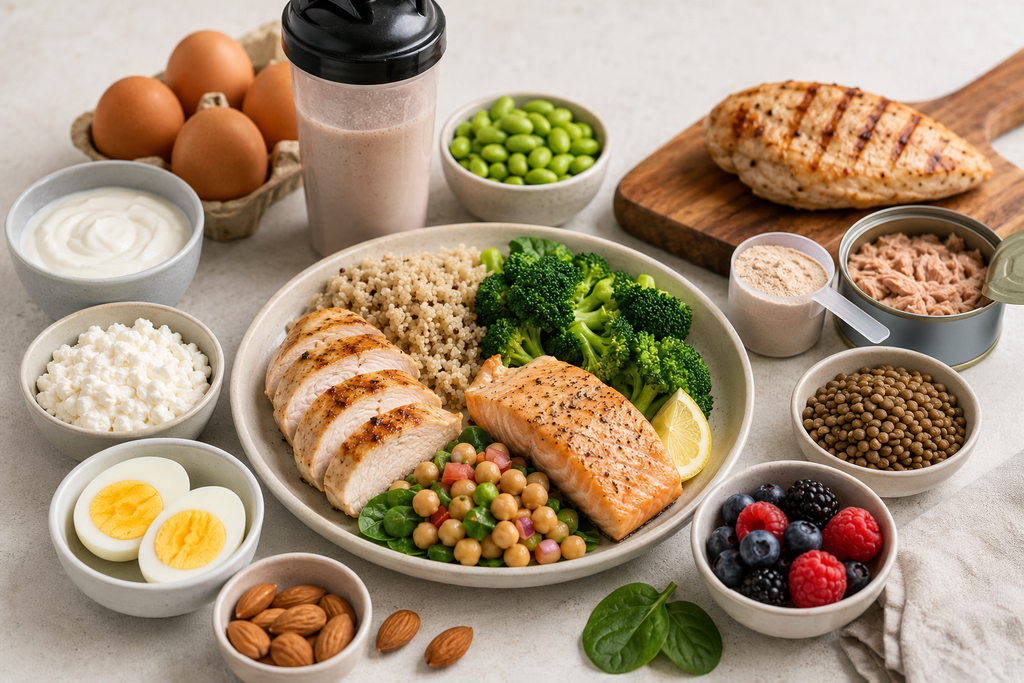
Everyday Protein Sources: Indian and Global Options
The values below are approximate and vary by brand, variety, cooking method and portion. They are drawn from the Indian Food Composition Tables 2017 (ICMR-NIN) and USDA FoodData Central values as reported in compilations.
| Food | Typical portion | Approx. protein |
|---|---|---|
| Cooked dal | 1 katori (150–200 g) | 6–10 g (thicker dal gives more) |
| Cooked chickpeas / rajma | ½ cup (~85 g) | ~7–8 g |
| Egg | 1 large | ~6 g |
| Paneer | 50 g | ~9 g |
| Curd (dahi) | 100 g | ~3 g |
| Cooked skinless chicken breast | 100 g | ~30 g |
| Soya chunks (dry weight) | 30 g | ~14–15 g |
| Whole-wheat roti | 1 medium | ~3 g |
Nuts and seeds also contribute protein, along with fats and fibre, though in smaller amounts per portion.
Vegetarians and vegans. Combine pulses, soy, dairy (if included), nuts, seeds and whole grains through the day. Vegans should ask a professional about nutrients not reliably found in plant foods, such as vitamin B12.
Non-vegetarians. Eggs, fish, poultry and dairy are convenient. Variety still matters.
A Simple Protein-Friendly Day (Example)
This is a general illustration, not a prescription.
- Breakfast: besan chilla with curd, or eggs with whole-grain toast.
- Mid-morning: roasted chana, or fruit with a few nuts.
- Lunch: dal, roti or rice, vegetables and salad, with paneer or chicken if you eat them.
- Evening: sprouts chaat or buttermilk.
- Dinner: rajma or fish curry with vegetables and a modest portion of grains.
Practical Ways to Build a Better Protein Diet
- Start with one meal. Add a protein food to your usual breakfast before changing everything.
- Use pulses daily. Dal, chana, rajma and lentil soups are affordable and widely available.
- Swap, don’t just add. Replace biscuits or chips with roasted chana, nuts or curd.
- Read labels. “High protein” on a snack does not make it healthy. Check sugar, salt and ingredients.
- Cook simply. Steaming, grilling or light sautéing keeps meals balanced.
- Think weekly, not perfectly. A consistent pattern matters more than one low-protein day.
Other Factors That Matter
- Total diet quality: protein cannot replace fibre, healthy fats, vitamins and minerals. Fruits, vegetables and whole grains remain important.
- Movement: muscle responds to use. Walking, bodyweight exercise or resistance training gives protein something to work with.
- Energy intake and consistency: under-eating overall makes it harder to meet needs, and sustainable habits beat short bursts of extreme eating.
Common Misconceptions and Safety Points
“More protein is always better.” Not necessarily. For muscle gain in trained adults, the meta-analysis above found no further benefit beyond about 1.6 g/kg/day. Very high intakes can also crowd out other nutritious foods.
“You need protein powder to build muscle.” ICMR-NIN’s 2024 guidelines advise obtaining protein through food and avoiding protein supplements to build muscle mass. Supplements may still be convenient for some athletes or people with medical needs. Quality is also a concern: a 2024 observational analysis of 36 popular protein powders sold in India, published in the journal Medicine, reported that nearly 70% had inaccurate protein information, and about 14% had aflatoxin contamination. This was a small, self-funded study of selected brands, so it should not be read as proof about every product. If you consider a supplement, discuss it with a professional and check independent testing and labels.
“High-protein diets always damage the kidneys.” The evidence is more nuanced. A systematic review of trials and observational studies in healthy individuals found that protein intakes above the US RDA but within recommended ranges had little or no effect on blood markers of kidney function, at least in the short term. By contrast, an epidemiological review found that in people with reduced kidney function, intakes around 0.8 g/kg ideal weight could limit decline. If you have kidney disease, follow your clinician’s advice.
“A protein diet is only for gym-goers.” Older adults, growing children, vegetarians and people recovering from illness can all benefit from planning their protein.
Seek professional advice if you: have kidney or liver disease, diabetes, a food allergy, are pregnant or breastfeeding, take regular medication, have a history of disordered eating, or are planning a very high-protein or restrictive diet. This article is general education, not personal medical advice.
FAQs
1. How much protein should a beginner eat daily? Most healthy adults can start around 0.83 g per kg of body weight (about 50 g for a 60 kg person), then adjust with professional guidance for activity, age and health.
2. Can vegetarians get enough protein? Yes, with planning. Pulses, soy, dairy, nuts, seeds and grains eaten across the day can supply the essential amino acids.
3. Is dal enough on its own? Dal is valuable, but one katori provides a modest share of daily needs. Eating it with grains and other protein foods works better.
4. Do I need protein supplements? Usually not. Whole foods can meet most people’s needs, and Indian national guidelines advise against supplements for building muscle. Ask a professional if you have special requirements.
5. Can eating too much protein be harmful? It can be for some people, such as those with kidney disease. For healthy people, the main practical issue is balance, since extra protein may displace other nutrients.
6. Does protein help with weight management? It may help some people feel fuller, but it does not guarantee weight loss. Overall eating pattern, activity and sleep also matter.
Conclusion
Protein is essential, but you do not need to obsess over it. Most adults do well with steady, moderate intake from varied foods like dal, eggs, curd, paneer, soy, fish, nuts and whole grains. Extra beyond a point adds little for muscle building, and supplements are a convenience, not a requirement.
Next steps: add one protein-rich food to your breakfast this week, then compare your rough daily intake with your body-weight estimate. If you have a medical condition or special goals, speak to a doctor or dietitian first.