
Written by Vardan Patel
Co-Creator & Health and Fitness Content Creator at FitHub 365
Vardan combines his personal experience with exercise and healthy lifestyle habits with research from reputable health organizations and scientific sources to create practical, beginner-friendly health and fitness content.
The Science Behind Healthy Ageing: Which Habits Actually Matter
Most of us know someone who is 75 and walks to the market every morning, and someone else who is 60 and struggles with stairs. Genes play a part in that gap, but they’re not the whole story. Daily habits, the environment people live in and access to healthcare also shape how well people age.
This article explains what researchers mean by healthy ageing, which healthy habits have the strongest evidence behind them, and what that evidence can’t promise.
Key takeaways
- Healthy ageing is mostly about staying able to do what matters to you, not about looking young or living to 100.
- Regular movement, including strength and balance work, is among the best-supported habits for staying independent.
- Large studies link combinations of habits (not smoking, staying active, eating well, healthy weight, moderate alcohol) with longer life, but these are associations, not guarantees.
- Dementia risk is shaped by many factors you can influence, such as blood pressure, hearing, vision, activity and social contact.
- Small, repeatable habits beat dramatic overhauls, and none of this replaces regular medical check-ups.
What “healthy ageing” actually means
The World Health Organization defines healthy ageing as the ongoing process of developing and maintaining the functional ability that enables wellbeing in older age. That sounds abstract, so here’s a plain version: can you do the things you value, for as long as possible? g2aging
WHO’s framework says functional ability comes from the interaction between a person’s intrinsic capacity (mobility, thinking, senses, mood and vitality) and the physical and social environment around them. Two things follow from this. nih
First, you don’t need to be free of illness to age well. Someone with managed diabetes who still cooks, travels and sees friends is ageing healthily by this definition.
Second, your surroundings count. A person with strong knees can still be housebound if the building has no lift or the pavements are unsafe. Habits matter, but they’re not the only lever, and nobody should feel personally to blame for everything that changes with age.
It also helps to know that age and capacity don’t always match. An 80-year-old can sometimes have mental and physical capacities similar to those of a much younger person. That variation is exactly why researchers study habits. nih

Movement: the habit with the clearest payoff
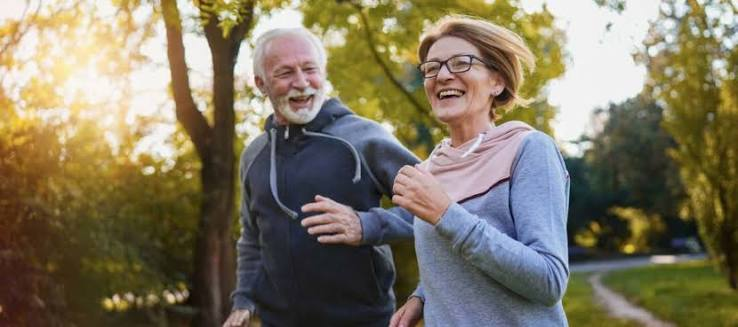
If you could keep only one habit, most researchers would point to regular physical activity. It supports the heart, bones, muscles, balance and mood at once.
How much is enough for healthy aging?
For adults aged 65 and over, WHO recommends at least 150 minutes of moderate-intensity aerobic activity a week (or 75 minutes of vigorous activity, or an equivalent mix), muscle-strengthening on two or more days a week, and balance-focused activity on three or more days for people with poor mobility. WHO also says some activity is better than none, and that people who can’t reach the targets because of health conditions should be as active as their abilities allow. nihwho
Those numbers look big until you break them down. A brisk 20-minute walk a day gets you to roughly 140 minutes. Moderate means you can talk but couldn’t sing.
What this looks like in real life
- Walking after dinner, or to the market instead of taking a rickshaw for a short trip.
- Climbing stairs when a lift isn’t essential.
- Squatting down and standing up from a chair without using your hands, which is a simple strength exercise.
- Standing on one leg while holding a counter as you brush your teeth, to practise balance.
- Gardening, playing with grandchildren, or carrying groceries.
- Yoga or tai chi classes if you enjoy them. They combine movement, balance and social contact, though the research on specific styles varies.
The common barriers are fear of falling, joint pain and lack of time. If pain or a medical condition limits you, a doctor or physiotherapist can help you start at a safe level. Starting small and building slowly is a sound approach, not a lazy one.
What a combination of habits can do
The best-known study here comes from Harvard researchers. Using data from the Nurses’ Health Study (78,865 women) and the Health Professionals Follow-up Study (44,354 men), they scored people on five low-risk factors: never smoking, a BMI of 18.5 to 24.9, at least 30 minutes a day of moderate or vigorous activity, moderate alcohol intake and a high-quality diet. eur
At age 50, women with all five low-risk factors were projected to live about 14 years longer than women with none, and men about 12.2 years longer. Those who followed all five were also 74% less likely to die during the study period. eurharvard
Those numbers are striking, so here are the caveats. This was an observational study. It shows that these habits travel with longer life, not that each habit alone caused the gain. The participants were American health professionals, who may differ from the general population or from readers in India. And the analysis did not account for things like stress, diabetes, high blood pressure or high cholesterol. Read it as strong evidence that habits matter, not as a precise forecast for any one person. sci-sport
Looking after your brain
Worries about memory sit behind many searches on ageing, so it’s worth knowing what the research says.
The 2024 Lancet Commission on dementia identified 14 modifiable risk factors: high LDL cholesterol, vision loss, lower education, hearing impairment, high blood pressure, smoking, obesity, depression, physical inactivity, diabetes, excessive alcohol, traumatic brain injury, air pollution and social isolation. The Commission estimated that up to 45% of dementia cases could potentially be prevented or delayed if all 14 were eliminated. dementiaalzheimer-europe
That 45% figure needs care. It rests on a calculation that assumes these risk factors are causal and can be fully removed, which is unrealistic for any real person. Dementia also isn’t anyone’s fault, and people who do everything “right” can still develop it. ewn
The practical lesson is that much of brain protection looks like general health care:
- Get blood pressure, blood sugar and cholesterol checked, and treat them if needed.
- Use hearing aids or glasses when you need them, rather than putting it off.
- Stay physically active, and keep in touch with friends and family.
- Avoid smoking and heavy drinking, and protect your head (helmets, preventing falls).
Hearing and vision checks are easy to overlook, and they’re among the cheapest steps on that list.
What to put on your plate
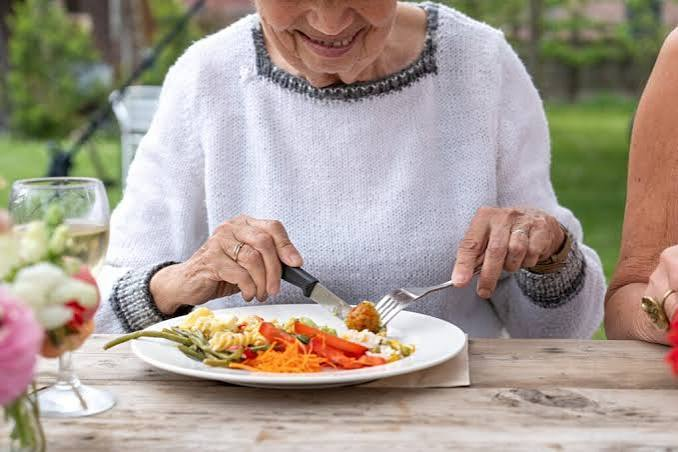
None of the sources above names a single “anti-ageing food”, and for good reason: researchers have never shown that one food slows ageing. What the Harvard study scored was overall diet quality, meaning the pattern rather than any one ingredient.
A sensible pattern for most readers is built around vegetables, fruit, pulses, whole grains and modest amounts of healthy fats, with fewer ultra-processed foods and sugary drinks. In an Indian kitchen that can mean:
- Dal, rajma, chana or sprouts as regular protein sources, with curd or paneer where they fit your diet.
- Vegetable sabzi in at least two meals, and seasonal fruit instead of packaged sweets.
- Millets, brown rice, whole wheat roti or oats in place of some refined grains.
- A handful of nuts or roasted chana as a snack instead of fried namkeen.
Outside India, similar swaps work: beans and lentils, yoghurt, whole-grain bread, frozen vegetables (just as useful as fresh, and often cheaper) and tinned fish or eggs for protein.
Older adults sometimes eat too little protein or too little overall because appetite fades, so unplanned weight loss is worth mentioning to a doctor. Anyone with kidney disease, diabetes, food allergies or a prescription diet should follow their care team’s advice rather than a general article.
The quieter habits: sleep, stress and people
Not everything here has the same quality of evidence, so it’s worth being clear about that.
Social isolation is on the Lancet Commission’s list, so staying connected is more than a nicety. A weekly phone call, a neighbourhood walking group or a temple, mosque or community-centre routine all count. Depression is also on the list, and low mood in later life is treatable, so it’s worth raising with a doctor instead of dismissing as “just age”.
Sleep and stress are widely believed to matter for ageing, and poor sleep clearly affects daytime energy and mood. The strength of the evidence for specific sleep durations in later life is less clear-cut, so aim for regular sleep and wake times and talk to a doctor about persistent insomnia.
Misconceptions and limits
- “Anti-ageing” supplements and creams. Nothing in this evidence supports a pill or product that reverses ageing. Be sceptical of claims that sound too good.
- “It’s too late to start.” WHO guidance says inactive older adults gain added benefit when they become more active. Benefits don’t expire at 60.
- “Ageing is entirely genetic.” Genes matter, but the studies above suggest habits play a large role. Neither side tells the full story.
- “Healthy habits guarantee a long life.” They improve the odds. They don’t remove risk.
When to speak to a professional
See a doctor before starting a new exercise programme if you have heart disease, uncontrolled blood pressure, diabetes, joint problems or unexplained symptoms. Seek advice promptly for repeated falls, noticeable memory changes, persistent low mood, sudden vision or hearing loss, or unplanned weight loss.

Frequently asked questions
At what age should I start building healthy habits?
As early as possible, but any age is a good time. The Lancet Commission frames dementia prevention as something that spans the whole life course, and WHO notes that inactive older adults still gain from becoming active.
Is walking enough, or do I need the gym?
Walking is a good start for the aerobic part. WHO also recommends strength work on two or more days a week, which you can do with body-weight exercises at home, resistance bands or the gym. Balance practice matters more as you get older.
Can healthy habits fully prevent dementia?
No. They may lower or delay risk, but the 45% estimate is a population-level figure that assumes the risk factors are causal and can be eliminated. Individual outcomes vary.
Do I need supplements to age well?
Not as a general rule. A varied diet covers most needs for most people. Some people, such as those with deficiencies or particular conditions, do need supplements, and that’s a decision for a doctor.
How long before I notice a difference?
It depends on the habit and the person. Many people notice mood or energy changes within weeks of becoming more active, but the long-term benefits build over years, so judge progress by consistency rather than quick results.
Does the “five habits add 14 years” finding apply to me?
It applies to the group studied, who were mostly health professionals in the US. The direction of the finding is consistent with other research, but your personal result can’t be predicted from it.
Conclusion
Healthy ageing comes down to protecting your ability to live the way you want, and the best-supported habits are fairly ordinary: move regularly, include strength and balance work, eat a varied diet, avoid smoking and heavy drinking, stay connected and keep up with health checks. None of it guarantees a particular outcome, but together these habits improve the odds.
A reasonable next step is to pick one habit you can repeat this week, such as a 20-minute walk after dinner, and book any pending blood pressure, vision or hearing check you’ve been putting off.