

Written by Vardan Patel
Co-Creator & Health and Fitness Content Creator at FitHub 365
Vardan combines his personal experience with exercise and healthy lifestyle habits with research from reputable health organizations and scientific sources to create practical, beginner-friendly health and fitness content.
Key takeaways
- Music is a low-cost, low-risk support for mood, stress and sleep. It is not a replacement for treatment.
- The best evidence is for music therapy delivered by trained professionals alongside usual care, and for listening to music before bed.
- Choosing your own music and listening on purpose matters more than any particular genre.
- Music that keeps you stuck in sadness or worry may not help. Notice how you feel afterwards.
- If low mood, anxiety or sleeplessness lasts for weeks or affects daily life, speak to a doctor or mental health professional.
How Music Helps Mental Health: What the Research Says and How to Use It
Most of us have done it without thinking: put on a favourite song after a rough day, hummed along to a bhajan while cooking, or pulled earphones on during a crowded commute just to get some peace. People often feel a little steadier afterwards. But does music actually help mental health, or does it just feel nice?
The honest answer is that music can help in some specific ways, and the evidence is stronger for some uses than others. This article walks through what research has found, what it hasn’t shown, and how to use music in everyday life without expecting too much from it.
So, does music really help mental health?
Often, yes, though it is a support rather than a cure. A large review commissioned by the World Health Organization’s European office looked at the global research on arts and health. It drew on over 3,000 studies and identified a major role for the arts in preventing ill health, promoting health, and managing and treating illness across the lifespan. Music is one part of that wider picture. mpg
The review also pointed to specific uses where the evidence base is already substantial. One example it names is recorded music for patients before surgery. That is a medical setting, but it shows that researchers take music’s calming effects seriously. scribd
The word “arts” covers a lot, so don’t read this as proof that every playlist improves every mood. The studies behind these reviews vary widely in design and quality. The WHO report itself notes the evidence includes small pilot studies and case studies as well as large cohort studies and randomised controlled trials. Findings from the stronger designs deserve more weight. inventculture
Listening versus music therapy: they aren’t the same thing
People often mix these up, and the difference matters when you read research.
Everyday listening is what you do on your own: playing songs you like, for pleasure or to change your mood.
Music therapy is a structured treatment delivered by a trained therapist, with goals and a plan. It can involve listening, but it can also involve making music. Researchers commonly describe four methods: receptive (listening), composition, improvisation and re-creative (performing). cambridge
Much of the strongest clinical evidence is about music therapy, not about casually streaming songs. Both can be valuable, but one shouldn’t be used to claim the benefits of the other.
What the evidence says about depression
The most useful source here is a Cochrane review, a type of study that pools results from many trials. It looked at music therapy for people diagnosed with depression. Its findings pointed to a benefit when music therapy was added to usual treatment, in the short term, along with improvements in anxiety and functioning. cambridgecore
There is an important qualification. A family-medicine summary of the review describes the evidence as low to moderate in quality, with music therapy seen as a low-cost, low-risk addition that may be worth considering alongside standard care. Researchers also said longer-term effects still need study. aafp
In plain terms: music therapy may help when it is used alongside other treatment. The research doesn’t say music alone treats depression, and it doesn’t say playlists replace therapy or medicine.
Music and sleep
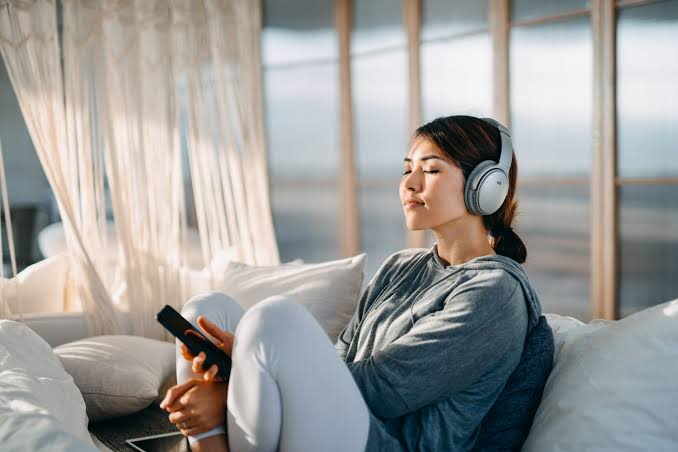
Poor sleep and poor mental health tend to feed each other. Worry keeps you awake, and a tired mind copes less well the next day. Listening to music before bed is one of the most common self-help strategies, and it has been studied fairly carefully.
A Cochrane review of adults with insomnia symptoms included 13 randomised trials with 1,007 participants. In these trials people listened to pre-recorded music for 25 to 60 minutes daily, over three days to three months. The reviewers found moderate-certainty evidence that music improved sleep quality compared with no treatment or usual care. neurologyliveneurologylive
Two caveats are worth knowing:
- The reviewers said their confidence was only moderate because participants knew which group they were in, and some of the people scoring results knew too. neurologylive
- Three studies with objective sleep measurements suggested music may not improve those measures. So people may feel they sleep better without the recordings showing a measurable change. uni-koeln
A later review focused on adults with mental health problems. It concluded that music interventions could have the potential to improve sleep quality, though more high-quality studies are needed. berklee

How might music work? (Plausible explanations, not proven ones)
Researchers have proposed several explanations, and none of them is a settled fact for every person:
- Emotional regulation. Music gives you a way to name and shift a feeling. Slow, soft music may help you wind down. Upbeat music may help you get moving.
- Distraction. A song or a tune can pull attention away from worry, at least for a while.
- Relaxation. Slow, predictable music may help your body settle, which can make it easier to fall asleep.
- Connection. Singing in a group, attending a kirtan or playing with others adds social contact, which supports well-being in its own right.
- Routine. A regular “wind-down” playlist can become a cue that tells your mind the day is ending.
These are reasonable ideas, and the sleep research above is partly based on them. But I haven’t verified detailed brain-chemistry claims for this draft, so I’ve left them out rather than guess.
How to use music for your mental well-being
You don’t need special equipment or a subscription. Here are some realistic ways to start.
Build a short wind-down routine
Pick 20 to 30 minutes before bed. Choose calm, familiar music you don’t have to think about. Lower the volume and put your phone somewhere you won’t be tempted to scroll. The sleep trials mostly used pre-recorded music for 25 to 60 minutes, so this is a reasonable window to try. Give it a couple of weeks before judging it, since sleep habits take time to shift.
Match the music to what you need
- Feeling wound up or anxious? Slower, gentler music often works better than loud or fast tracks.
- Feeling flat or low on energy? Something with a lively rhythm can help you get started on a chore or a short walk.
- Just need a break? Familiar songs often work better than new ones, because you don’t have to concentrate.
There is no “best” genre. Hindustani or Carnatic classical music, devotional songs, old film music, ghazals, instrumental tracks and nature sounds can all work. What matters is that the music feels pleasant and manageable to you. Many people are told that particular ragas treat particular illnesses. I haven’t verified research supporting that claim, so treat it as tradition rather than established medicine.

Make it active when you can
Singing in the shower, humming while cooking, learning a simple instrument, playing along with a song or joining a community choir or bhajan group all count. Making music adds movement, focus and sometimes company, which listening alone doesn’t.
Pair music with other small habits
Music works well alongside everyday routines such as a short walk, light stretching or washing up. It’s easier to build a habit when it’s attached to something you already do.
Use free or low-cost options
Free streaming tiers, radio, YouTube playlists, local libraries and community singing groups are all fine. Expensive headphones or paid programmes aren’t needed.
When music might not help
Music is not harmless for everyone in every situation.
- Sad music can backfire. Some people feel comforted by it, but if you notice it pulling you further down or feeding rumination (going over the same thoughts again and again), switch to something different.
- Loud music and headphones can affect your hearing. Keep the volume at a level where you could still hold a conversation.
- Some songs are tied to painful memories. If a track triggers distress, it’s fine to skip it.
- Falling asleep with earphones in can be uncomfortable or unsafe. A speaker or a sleep timer is often easier.
- Don’t expect quick fixes. Even in studies that found benefits, the results were modest and varied between people.
When to seek professional support
Music can be one part of looking after yourself, but it can’t replace professional help. Consider speaking to a doctor, counsellor or mental health professional if:
- low mood, anxiety or poor sleep lasts for more than a couple of weeks,
- these feelings are getting in the way of work, study, relationships or daily tasks, or
- you have thoughts of harming yourself.
If you’re in immediate danger or thinking about suicide, contact local emergency services or a crisis helpline in your country straight away. In India, you can ask your doctor or a local hospital about helplines available in your area. (Editor: please add a verified current helpline number before publishing.)
Frequently asked questions
Can music cure depression or anxiety?
No. Research suggests music therapy may help as an addition to usual care for depression, and it’s linked with some improvements in anxiety. It has not been shown to cure either condition on its own.
What type of music is best for mental health?
There is no single best type. Music you find pleasant and calming, or energising when you need that, is likely to work better than something chosen because it is “supposed to” help.
How long should I listen each day?
There’s no proven ideal. The sleep studies mentioned above used 25 to 60 minutes of recorded music daily. Starting with 20 to 30 minutes before bed is a reasonable experiment, not a medical prescription.
Is listening to music the same as music therapy?
No. Music therapy is delivered by a trained professional with a structured plan. Listening on your own can still be enjoyable and relaxing, but it’s a different thing and may not give the same results.
Can music help children or older adults?
The Cochrane review on depression included people of any age, and the sleep research includes older adults and hospital patients. But needs vary a lot by age and health. For children or for people with dementia or other conditions, ask a health professional.
Should I listen to music while studying or working?
It depends on the person and the task. Calm, familiar music helps some people focus, while others find any music distracting. Try both and notice which helps you. I haven’t verified research on this for the present draft.
Conclusion
Music is one of the simplest, cheapest tools we have for looking after our mood. The research suggests it can help with stress, sleep and, when delivered as therapy alongside usual care, with depression symptoms. The evidence is promising, but it is not strong enough to promise any particular result.
A sensible next step is small: choose a calming playlist and try it for 20 to 30 minutes before bed for two weeks, noticing how you feel. If you’re struggling for longer than that, treat music as a companion to professional help, not a substitute for it.