Written by Teerth Busa: Health & Fitness Content Writer
Teerth Busa researches exercise, fitness, nutrition, mental well-being, and healthy lifestyle topics using reputable health organizations and scientific sources. His content is written to make health and fitness information simple, practical, and easy to understand.
Key takeaways
- True protein deficiency is uncommon in people who eat regular meals, but low intake is more common than many assume, especially in older adults.
- Most “signs” are non-specific. Tiredness, hair thinning and frequent colds have many causes, so they hint at a problem rather than prove one.
- Swelling from low protein generally appears only in severe deficiency. Unexplained swelling needs a doctor, not a diet tweak.
- The adult RDA is 0.8 g of protein per kg of body weight daily. Some research suggests older adults may do better with more.
- Food usually comes first. Dal, eggs, curd, paneer, soy, fish and chicken can all do the job.
Signs You May Not Be Eating Enough Protein
Your body is made of protein in a very literal sense. Muscles, skin, hair, nails, enzymes and antibodies all depend on it. So if you’ve been feeling run down, noticing your hair thin out, or wondering why a cut is taking so long to heal, it’s fair to ask whether your plate is falling short.
Here’s the short answer. Frank protein deficiency is rare among people who eat enough food overall. But marginal intake is real, particularly for people who skip meals, eat mostly rice or roti with little dal or curd, follow restrictive diets, or have a poor appetite. The ten signs below are possible clues, ranked loosely from the most plausible to the least certain. None of them can confirm a deficiency on its own.
First, how much protein do you actually need?
The Recommended Dietary Allowance for adults is 0.8 grams per kilogram of body weight per day. Multiply your weight in kilograms by 0.8. A 60 kg person lands around 48 g a day, and a 70 kg person around 56 g. mdlinx
That figure is the amount that prevents deficiency in most healthy adults. It isn’t necessarily the amount that’s best for everyone. A review of the evidence on older adults notes that consuming more than the RDA can improve muscle mass, strength and function in older adults. Harvard Health also reports that researchers have linked roughly 1 to 1.2 g per kilogram daily with better independence in later life. Those studies show associations, so they don’t prove that extra protein causes the benefit. nihharvard
10 possible signs of low protein intake
1. Persistent tiredness and weakness
Low protein can contribute to weakness, mainly by wearing down muscle over time. But fatigue is one of the least specific symptoms there is. Poor sleep, low iron, thyroid problems, low vitamin B12, stress and not eating enough calories are all more common culprits. Treat tiredness as a reason to look at your overall diet, not as a protein diagnosis.
2. Losing muscle or strength
This is the most direct sign. When intake is too low, the body can draw on skeletal muscle to supply amino acids for more critical functions. Over months, that can show up as clothes fitting differently, struggling with stairs, or finding it harder to stand up from a low chair.
It matters most with age. Muscle loss starts in midlife and speeds up after about 60. Eating enough protein and doing some resistance exercise, even bodyweight work, is the combination with the best evidence.
3. Slow recovery after exercise
If soreness lingers for days or you aren’t getting stronger despite regular training, protein is one thing to check. Muscle repair needs amino acids. Still, under-sleeping, doing too much too soon and not eating enough overall slow recovery just as much. Beginners often blame the wrong factor.
4. Swelling in the feet, legs, hands or belly
Swelling (edema) is a classic feature of severe protein deficiency, the kind seen in kwashiorkor. Low levels of albumin, a blood protein, let fluid leak into tissues. In everyday life, though, this is unlikely unless intake is very low. Heart, kidney, liver and thyroid problems are far more common causes. If swelling is new, persistent or one-sided, see a doctor promptly. Don’t just add protein.
5. Thinning hair, brittle nails or dry skin
Hair, skin and nails are largely made of proteins such as keratin and collagen, so changes there can reflect poor nutrition. Low protein has been linked to a type of shedding called telogen effluvium. The catch is that iron deficiency, thyroid conditions, hormonal changes, crash dieting and stress produce very similar changes. If you notice these signs, look at your whole diet and consider blood tests before blaming protein.
6. Cuts and wounds that heal slowly
Tissue repair requires protein, and healing slows when intake is poor. This matters particularly for people recovering from surgery or illness, whose needs rise. If a wound isn’t healing at all, especially if you have diabetes, get it checked.
7. Getting sick often
Antibodies are proteins, so the immune system depends on an adequate supply. Frequent infections can accompany poor nutrition. They can also come from sleep loss, smoking, diabetes, close contact with children and many other things. This sign is supportive at best.
8. Feeling hungry soon after eating
Protein tends to be more filling than refined carbohydrates. A breakfast of only poha, white bread or biscuits with tea may leave you reaching for snacks by mid-morning. Adding eggs, sprouts, curd or paneer often changes that. The effect varies from person to person, and sleep, fibre and meal size all play a part.
9. Mood or concentration changes
Amino acids are building blocks for brain chemicals, and some articles claim low protein causes low mood. The human evidence here is thin. Low mood has many causes, and persistent sadness, anxiety or loss of interest deserves proper support from a doctor or mental health professional. Don’t try to fix it through diet alone.
10. Slowed growth in children
In children, long-term inadequate protein and energy intake can contribute to stunted growth. This is a matter for a paediatrician or public-health nutrition programme, not a home remedy.
Who is most likely to fall short?
Low intake is more likely in:
- Older adults, especially with reduced appetite or dental problems
- People recovering from surgery, injury or illness
- Vegetarians and vegans who rely mostly on cereals and don’t pair them with pulses, soy, nuts or dairy
- People dieting aggressively or skipping meals
- Anyone with digestive or kidney conditions that affect absorption or protein handling
Simple ways to raise your protein, without a supplement
Spreading protein across the day works better than loading it all into dinner. One practical target from the research is roughly 25 to 30 g per meal, though that isn’t a rule everyone must hit.
Some everyday swaps and additions:
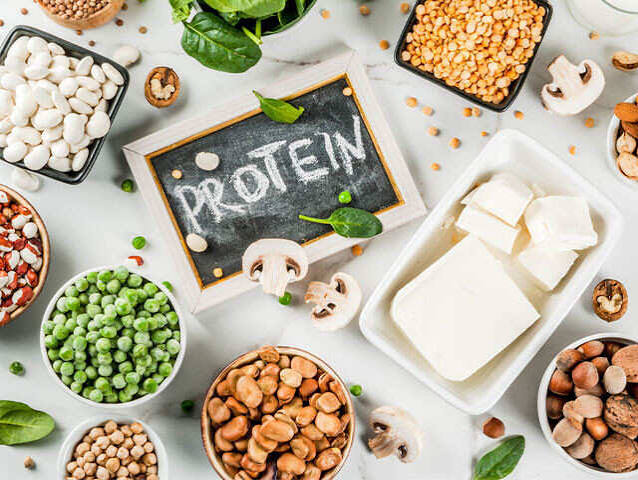
- Breakfast: Replace biscuits or plain bread with eggs, besan chilla, moong dal cheela, sprouts, or curd with nuts.
- Lunch and dinner: Make dal, rajma, chole or sambar a main part of the plate, not a thin side. Add paneer, tofu, soy chunks, fish, chicken or eggs if you eat them.
- Snacks: Roasted chana, a handful of peanuts, buttermilk, a glass of milk or a boiled egg beat packaged biscuits.
- Combining plant foods: Cereals and pulses together, as in dal-rice or rajma-chawal, complement each other’s amino acids across the day. You don’t need to combine them at every single meal.
For reference, one cup of cooked lentils provides about 18 g of protein, and one egg about 6 g, according to AARP’s nutrition summary. Protein in Indian dishes varies a lot by recipe and portion, so check an Indian food composition table before quoting exact numbers for specific dishes.
Protein powder can help someone who truly can’t meet needs from food, but it isn’t necessary for most people. It can be pricey, and quality varies by brand.
Misconceptions and cautions
More isn’t automatically better. Harvard-affiliated experts caution against going very high (around 2 g/kg or more) without a reason. People with kidney disease usually need to limit protein and should follow their doctor’s advice. Don’t increase protein on your own if you have a kidney or liver condition.
Protein won’t fix everything. It won’t cure hair loss, boost mood by itself or replace sleep, exercise and a varied diet.
Self-diagnosis is unreliable. The signs above overlap with anaemia, thyroid disease, diabetes and depression. A doctor can use a physical exam and blood tests, which is much more reliable than guessing from symptoms.
See a healthcare professional if you have unexplained swelling, unintentional weight loss, major weakness, wounds that won’t heal, or symptoms that persist despite eating well.
FAQs
Can you be low in protein and not know it?
Yes. Mild shortfalls often cause no obvious symptoms. Muscle loss tends to creep up slowly, which is why it’s easy to miss.
Is it possible to get enough protein as a vegetarian in India?
Yes. Dal, chickpeas, rajma, soy, curd, milk, paneer and nuts can cover needs for most people when eaten regularly in decent portions. Vegans can rely on pulses, soy products, nuts and seeds, and should plan carefully.
Does low protein cause hair fall?
It can contribute, particularly in significant shortfalls. But iron deficiency, thyroid disorders, stress and hormonal changes are more common causes, so get checked if hair loss is persistent.
Do I need protein shakes?
Usually not. Food is enough for most people. Shakes are a convenience for those with high needs, poor appetite or very busy schedules.
How do I know if I’m getting enough?
Track your food for a few typical days and compare it with your target (0.8 g per kg is the baseline). If you’re older, training regularly or recovering from illness, ask a doctor or registered dietitian about a higher goal.
Conclusion
Low protein can show up as lost muscle, slow recovery, brittle hair or nails, and slow healing. But almost every sign on this list has other possible causes, so see them as prompts to look at your diet, not as proof. A sensible next step is to check your usual intake against the 0.8 g per kg guideline and add a protein source to the meal where you currently have the least. If symptoms are persistent, unexplained or involve swelling, get them checked.
2 thoughts on “Protein: 10 Signs You May Not Be Eating Enough”