Written by Vardan Patel
Co-Creator & Health and Fitness Content Creator at FitHub 365
Vardan combines his personal experience with exercise and healthy lifestyle habits with research from reputable health organizations and scientific sources to create practical, beginner-friendly health and fitness content.
Key takeaways
- Winter doesn’t usually create more pollution by itself. Cold, calm weather stops existing pollution from spreading out.
- A temperature inversion acts like a lid over a city, and low wind speed keeps the trapped air from being flushed away.
- Fine particles (PM2.5) are the main health concern because they can reach deep into the lungs.
- You can’t control the weather, but you can reduce your exposure with a few practical habits.
Why Does Pollution Increase in Winter? What Is Really Happening and How to Protect Yourself
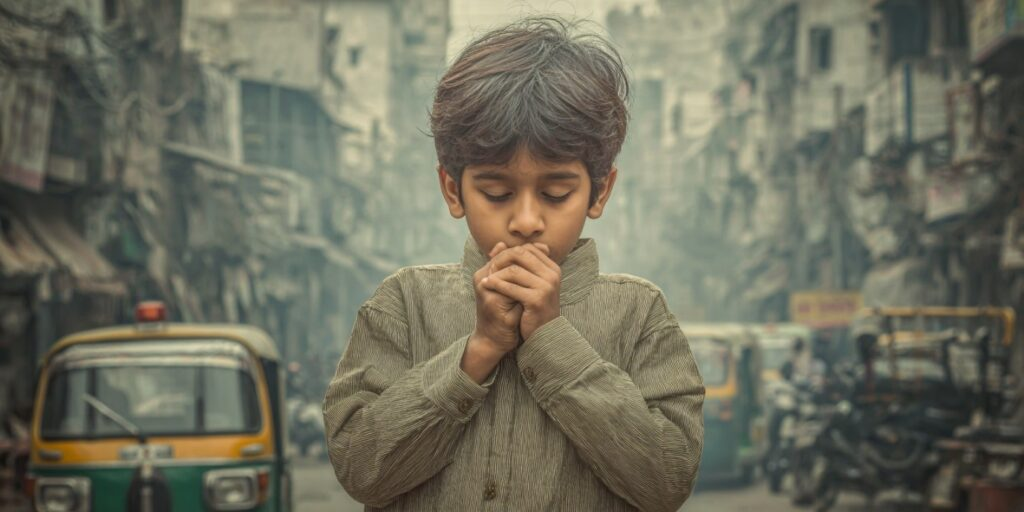
You step outside on a winter morning and the sky looks grey, the sun is a pale disc, and your throat feels scratchy. Then you check an air quality app and the number is much worse than it was a few months ago. Did the city suddenly start producing far more pollution?
Mostly, no. The main change is in the air itself. In winter, the atmosphere near the ground often stops moving and mixing the way it does in warmer months. Smoke from vehicles, factories, cooking fires, burning waste and, in some regions, crop residue has nowhere to go. It collects at the height where we breathe.
This article explains why that happens, why northern India is especially affected, what it can mean for your health, and what you can reasonably do about it.
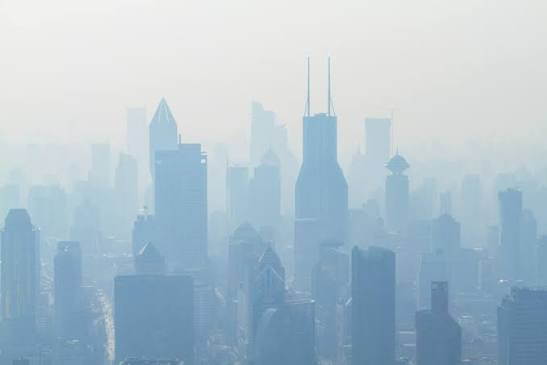
The short answer: pollution gets trapped, not just produced
Think of a room with a ceiling fan and an open window. Smoke from a candle disappears quickly. Now close the window, switch off the fan and light ten candles. The smoke lingers and thickens even though you didn’t add much.
Winter air behaves a bit like that closed room. Experts in Delhi describe winter smog as an emissions problem made worse by weather, not a weather problem alone. Cold temperatures, slow winds and temperature inversion keep pollutants from dispersing, so they stay close to the ground. The weather doesn’t make the pollution. It decides how much of it you end up breathing. etvbharat
Temperature inversion: the invisible lid
Normally, air gets cooler as you go higher. Warm air near the ground rises, carrying pollutants upward where they spread out and thin.
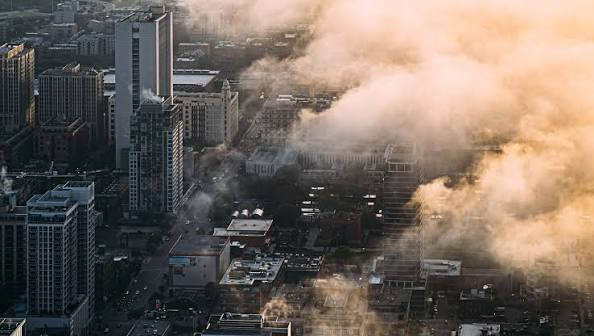
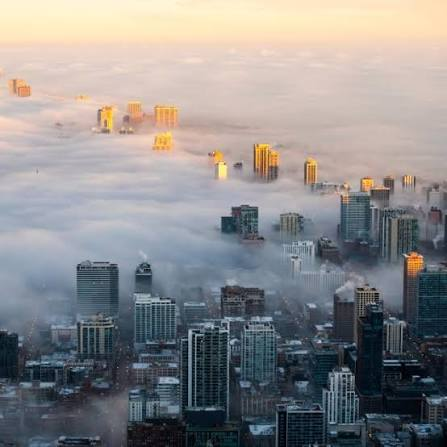
An inversion flips this. In a temperature inversion, a layer of warmer air sits above cooler air, and this traps pollution such as smog near the ground. Wikipedia
Winter nights are the perfect setup. Finland’s meteorological institute explains that air quality often falls quickly after long, clear nights with weak winds, because pollutants released into the lowest layer get trapped at breathing level. The European Environment Agency describes the same pattern: on cloud-free nights the ground loses heat rapidly, the air touching it turns colder, and warmer air above acts as a lid. ilmatieteenlaitoseuropa
Two details are worth knowing:
- Mornings are often worse than afternoons. A US state air agency notes that fine particle readings are often higher in the morning than the afternoon in winter, and links this to surface inversions. As the day warms, the lid weakens. If you exercise outdoors, this matters. ncsu
- Terrain matters. Valleys and basins make it worse. Hills or mountains around a city form an extra barrier to air circulation. Wikipedia
Low wind and shallow mixing height
An inversion is only part of the story. Two related ideas help explain what you see on a bad day.
Wind speed. Pollution needs somewhere to go. In Delhi’s winter, winds often weaken to below 5 km/h, and pollutants from local and nearby regions stay suspended longer. After the monsoon, winds become weaker and drier, so the rain-driven cleaning of the air stops. anantamiastheprint
Mixing height. This is the height of the layer in which pollutants can mix. When it is low, as one expert put it in news coverage, pollutants stay close to the ground instead of rising into higher layers of the atmosphere. One summary of the CPCB’s annual report states it falls from around 1,500 metres in summer to under 300 metres in winter. Treat that figure as secondary-source data and verify it against the original CPCB report before publishing. etvbharat
Why northern India feels it so strongly
The Indo-Gangetic Plain is a large, flat region with heavy traffic, industry, dense towns and farming. It also has little to disperse pollution in winter. Researchers studying cities such as Delhi and Patna found that weak winds, temperature inversions and reduced atmospheric mixing drive severe winter episodes, with low wind speed and high humidity intensifying PM2.5. businesstoday
Delhi’s own numbers show the seasonal swing. Outside the monsoon months, Delhi’s PM2.5 is well above the CPCB’s annual standard of 40 µg/m³ and daily standard of 60 µg/m³. energyandcleanair
What about stubble burning?
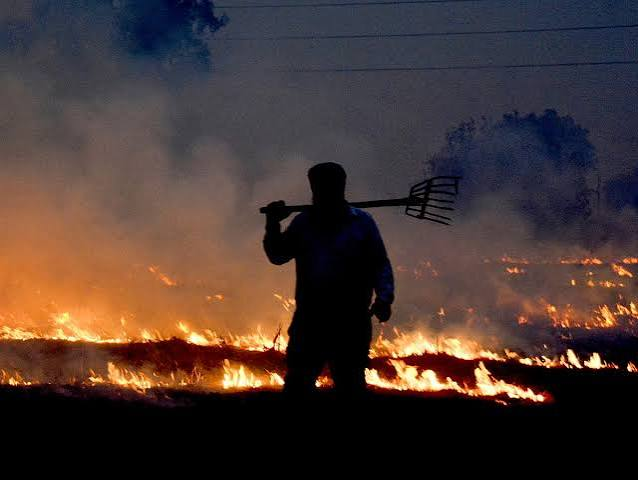
Burning crop residue after harvest is often blamed. It contributes, but researchers and analysts caution against treating it as the only cause. Smoke from farmland can be held over cities by an inversion and low winds. Some days its share is large and on other days it is small, because it depends on wind direction. One report mentioned its share falling to about 5 per cent on a day when the wind shifted (according to SAFAR as reported by CSE). downtoearthcseindia
The honest picture is a combination: local traffic, industry, dust and waste burning, plus seasonal farm fires and fireworks in some places, all sitting under unhelpful weather.
Fog and smog are not the same thing
Winter fog is made of water droplets. Smog is pollution. They can mix: high humidity and fog contribute to smog formation and reduce visibility. A foggy morning may therefore carry more pollution than it looks like. etvbharat
Is it only an Indian problem?
No. The same physics applies in many parts of the world. Finland’s weather service links winter inversions to pollution episodes in Nordic cities, and a US news report described a sunny winter day in Washington, D.C. with “moderate” air quality because snow, sunshine and light winds strengthened an inversion. The lesson for readers anywhere: a clear, sunny winter sky does not guarantee clean air. wjla
Also, winter isn’t the worst season everywhere. Some places have worse air in summer because of ozone or wildfire smoke. This article is about the cold-season pattern common to northern India and many temperate regions.
What it can mean for your health
The pollutant of greatest concern is PM2.5, particles 2.5 micrometres or smaller. WHO says these fine particles penetrate deep into the lungs and are among the pollutants most closely linked to premature death. WHO also states that long-term exposure raises the risk of respiratory infections, heart disease and lung cancer. whowho
Some points to keep in proportion:
- Much of the strongest evidence is about long-term exposure. A few bad days will not necessarily cause lasting harm to a healthy adult, though they can trigger symptoms.
- Short spikes commonly cause irritated eyes, throat or nose, cough, and breathlessness, and can worsen asthma or heart conditions. These are the people at highest risk: children, older adults, pregnant women, and anyone with asthma, COPD or heart disease.
- Winter has other respiratory triggers too, such as cold air and viral infections. A cough in December doesn’t prove pollution is the cause.
Practical ways to reduce your exposure
You can’t clear a city’s air, but you can change how much of it you breathe.
Check before you go out. Look at a local AQI source such as the CPCB or a reputable app. On poor-air days, shift outdoor workouts to later in the day when the lid has lifted, or move them indoors.
Adjust your exercise, don’t abandon it. Movement is still good for you. On bad days try brisk indoor options: stairs, bodyweight circuits, yoga, skipping, or a gym session. Avoid hard outdoor running near busy roads.
Choose masks carefully. Cloth masks and surgical masks are not designed to filter fine particles well. Commentary aimed at Delhi readers suggests N95 or FFP2-rated masks that fit snugly. A tight seal matters more than the brand. Fit is hard to achieve on young children, so check with a doctor. calpoly
Make indoor air a priority. Keep windows closed during peak pollution hours, usually early morning and night. Avoid burning incense, mosquito coils or wood indoors where possible. Cook with the exhaust fan on. If you can afford it, a HEPA purifier in the bedroom helps, but it is not essential, and it works best in a closed room.
Reduce what you add. Avoid burning leaves, waste or wood for warmth. Share rides or use public transport when practical, and keep your vehicle’s pollution check up to date.
Eat and drink sensibly. Warm fluids and a balanced diet with vegetables and fruit support general health. No food “detoxes” the lungs, and the evidence for specific home remedies like jaggery or turmeric milk protecting against pollution is limited, so treat them as comfort foods, not protection.
Know the limits. If you have asthma, a heart condition, or you’re pregnant, ask your doctor for a plan for high-pollution days, including how to use inhalers or medicines.
Common misconceptions
- “Winter air is dirtier because people burn more things.” Heating and burning add to it, but the larger factor is weak dispersion.
- “If I can’t see smog, the air is fine.” Fine particles can be invisible, and a clear sunny day can still carry an inversion.
- “One mask or purifier solves it.” Each reduces exposure. None eliminates it.
- “Stubble burning is the entire problem.” It’s a significant, seasonal contributor, not the only source.
Frequently asked questions
Why is the air worse in the morning and at night in winter?
Cold surface air and weak mixing are strongest then. Pollution builds up overnight and early morning, and eases as the sun warms the ground.
Does rain really help?
Often, yes. Rain and stronger winds can wash and sweep pollutants away. A frontal system can also break an inversion. This is why the monsoon months are typically cleaner in Delhi.
Is it safe to exercise outdoors on a poor-air day?
For a healthy adult, light activity on a moderately poor day is usually reasonable. On “very poor” or “severe” days, or if you have lung or heart disease, move indoors. Follow your doctor’s advice.
Do indoor plants clean the air?
Not at a scale that matters in a polluted city. Plants are pleasant, but they’re not a substitute for ventilation control, source reduction or filtration.
Can climate change make winter pollution worse?
Experts quoted in Indian news say changing weather patterns can contribute to longer episodes (temperature variations tied to climate change may contribute to persistent pollution episodes). The evidence here is still developing, so treat it as a plausible factor rather than a settled one. etvbharat
Conclusion
Winter pollution rises mainly because of the way cold, calm air behaves: an inversion lid, light winds and a shallow mixing layer hold emissions near the ground. In northern India, seasonal farm fires and fireworks sit on top of a steady background of traffic, industry and dust.
The practical lesson is to treat air quality like the weather forecast. Check it, and plan your outdoor time around it. Two sensible next steps are to pick a reliable AQI source and to set up one cleaner room at home. If you have a heart or lung condition, speak to your doctor about a high-pollution plan.