Written by Teerth Busa: Health & Fitness Content Writer
Teerth Busa researches exercise, fitness, nutrition, mental well-being, and healthy lifestyle topics using reputable health organizations and scientific sources. His content is written to make health and fitness information simple, practical, and easy to understand.
Key Takeaways
- A handful of dumbbell exercises can train every major muscle group: legs, hips, back, chest, shoulders and core.
- Public health guidelines recommend muscle-strengthening activity on at least two days a week for adults.
- Good technique and gradual progress matter more than heavy weights.
- You can start at home with one or two pairs of dumbbells, or with improvised weights.
- Results vary from person to person, so treat any timeline as a rough guide.
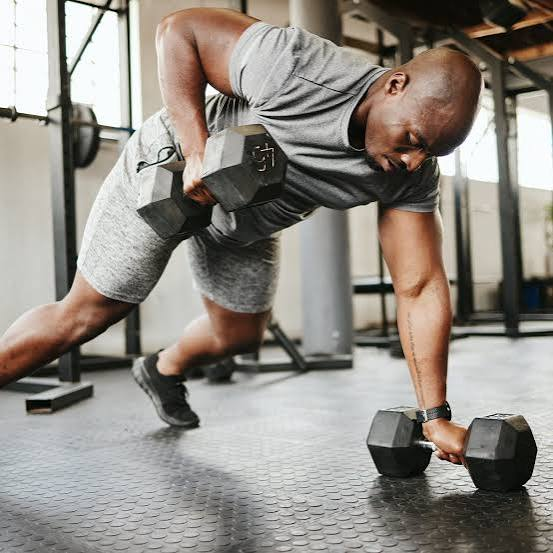
Best Dumbbell Exercises for a Full-Body Workout
If you’ve ever stood in front of a rack of dumbbells wondering where to begin, you’re in good company. Most beginners don’t need a complicated programme. They need a short list of movements that work the whole body, a sensible way to organise them, and a few rules to stay safe.
That is what this guide covers. Below you’ll find eight dumbbell exercises, how to do each one properly, a simple weekly plan, and answers to the questions beginners ask most often.
Why a Full-Body Dumbbell Workout Makes Sense
A full-body session trains your major muscle groups in one workout rather than splitting them across the week. For beginners, this has practical advantages. You don’t need to train six days a week, and missing one session doesn’t leave a muscle group untouched for days.
Dumbbells suit this approach well. Each arm or leg works independently, so a stronger side can’t quietly do most of the work. They also let your joints move along more natural paths than many fixed machines do, and they’re compact enough to store in a small flat.
Health organisations support the basic idea. The World Health Organization’s 2020 guidelines advise adults to do muscle-strengthening activities involving all major muscle groups on two or more days a week, alongside aerobic activity. The US physical activity guidelines say much the same. Dumbbell training is one convenient way to meet that recommendation, though not the only one. Resistance bands, body-weight exercises and gym machines count too.
Before You Start: Choosing Weight and Setting Up
Pick a weight you can lift for 8 to 12 repetitions with good form, where the last two or three reps feel challenging but not shaky. If you can easily do 15 or more, the weight is too light. If your form falls apart by rep five, it’s too heavy.
Many beginners start with 2 to 5 kg per hand for upper-body moves and somewhat heavier for squats and deadlifts. These are only starting points. Strength varies widely, so let your own form guide you.
If you don’t own dumbbells yet, adjustable sets save space and money, and they’re worth considering if you plan to keep training. In the meantime, a sturdy backpack filled with books or a bottle filled with water or sand can work for lighter exercises. Make sure whatever you use is secure and can’t shift suddenly.
Warm up for five minutes first. Brisk walking, marching on the spot, arm circles and a few bodyweight squats are enough.
The Eight Exercises
1. Goblet Squat (legs and hips)
Hold one dumbbell upright against your chest with both hands. Stand with your feet slightly wider than your hips, then lower your hips back and down as if sitting into a chair. Keep your chest lifted and your heels on the floor. Stand back up by pushing through your whole foot.
The weight in front of you helps many beginners stay upright and balanced, which is why this squat is so often taught first.
2. Dumbbell Romanian Deadlift (back of the legs and lower back)
Stand holding a dumbbell in each hand in front of your thighs. With a soft bend in your knees, push your hips straight back and let the weights slide down your legs. Stop when you feel a stretch behind your thighs, usually around mid-shin, then drive your hips forward to stand.
The movement comes from the hips, not from rounding your back. If your back starts to curl, reduce the depth or the weight.
3. Dumbbell Floor Press (chest, shoulders, back of the arms)
Lie on your back with knees bent and a dumbbell in each hand. Start with your elbows resting on the floor, then press the weights up until your arms are straight. Lower slowly until your upper arms touch the floor lightly.
Pressing from the floor needs no bench and limits how far your shoulders can stretch, which many beginners find more comfortable than a bench press.
4. One-Arm Dumbbell Row (upper back and biceps)
Place one hand and the same-side knee on a sturdy bench or sofa. Hold a dumbbell in the other hand, arm hanging straight down. Pull the dumbbell toward your hip, keeping your elbow close to your body, then lower it with control. Complete all reps, then switch sides.
Many people spend their days hunched over phones and laptops. Rowing movements strengthen the muscles between and below the shoulder blades, which helps balance all that forward-leaning time.
5. Standing or Seated Dumbbell Shoulder Press (shoulders and arms)
Hold the dumbbells at shoulder height with palms facing forward or toward each other. Press them overhead until your arms are almost straight, then lower them back slowly. Keep your ribs down and avoid arching your lower back. Sitting on a chair with back support is a good way to start.
6. Reverse Lunge (legs and glutes)
Hold a dumbbell in each hand at your sides. Step one foot back and lower until both knees are bent at roughly right angles, then push through the front foot to return. Alternate legs.
Stepping backward is usually gentler on the front knee and easier to control than stepping forward. If balance is a problem, hold a wall or chair with one hand and use a single light dumbbell.
7. Dumbbell Glute Bridge (glutes and hamstrings)
Lie on your back with knees bent and feet flat. Rest one dumbbell across your hips, holding it steady. Push through your heels to lift your hips until your body forms a straight line from shoulders to knees. Pause briefly at the top, then lower.
8. Farmer’s Carry (grip, core, shoulders)
Pick up a heavier dumbbell in each hand and walk steadily for 20 to 40 seconds, standing tall with your shoulders relaxed. It looks almost too simple, but it challenges your grip and trunk strength and mirrors real-life tasks like carrying shopping bags or a water can.
A Simple Weekly Plan
For most beginners, two or three full-body sessions a week on non-consecutive days is enough. For example, Monday and Thursday, or Monday, Wednesday and Friday.
A beginner session might look like this:
- Do 2 to 3 sets of each exercise.
- Aim for 8 to 12 repetitions per set (for the carry, 20 to 40 seconds).
- Rest 60 to 90 seconds between sets.
- The whole session should take roughly 30 to 45 minutes.
If eight exercises feel like too much, start with four: goblet squat, floor press, one-arm row and glute bridge. Add the others over a few weeks.
Progressing Without Rushing
Strength gains come from asking your muscles to do slightly more over time. The usual methods are adding one or two reps, adding a set, or moving to a slightly heavier dumbbell once you can complete all your sets comfortably at the top of your rep range.
Research on resistance training, such as a 2017 meta-analysis by Schoenfeld and colleagues, suggests that doing more weekly sets for a muscle tends to produce more growth, at least up to a point. This doesn’t mean beginners should rush to high volume. Starting modestly and building gradually is safer, and it’s easier to keep up.
Be wary of any claim that you’ll “transform your body in 30 days.” People respond differently depending on their age, sleep, diet, training history and genetics. Noticing that weights feel lighter within a few weeks is a more realistic early sign than dramatic visible change.
Recovery and Everyday Habits
Training is only part of the picture. Muscles adapt during rest, so sleep and downtime matter. Mild soreness one or two days after a new exercise is common. Sharp pain, pain in a joint, or pain that lasts is not.
Eating enough overall food, including some protein at meals, supports recovery. Protein sources can be as varied as dal, chickpeas, curd, paneer, eggs, fish, chicken or tofu, depending on your preferences. You don’t need special supplements to start strength training, and they aren’t necessary for most beginners.
Walking, cycling or other aerobic activity complements strength training. Guidelines recommend both types of activity.
Common Mistakes to Avoid
- Lifting too heavy too soon. Poor form is the most common cause of avoidable strains.
- Rushing the reps. Swinging weights uses momentum rather than muscle. Lower the weight slowly.
- Holding your breath. Breathe out as you lift or push, and breathe in as you lower.
- Skipping the lower body. Legs and hips are the largest muscles and deserve equal attention.
- Changing the routine every week. Give a plan at least four to six weeks so you can actually see progress.
Safety and Who Should Check With a Professional First
Dumbbell training is suitable for many adults, but it isn’t right for everyone without guidance. Speak with a doctor or qualified physiotherapist before starting if you have a heart condition, high blood pressure that isn’t controlled, joint or back problems, are pregnant or recently postpartum, are recovering from surgery or injury, or are managing a long-term condition.
Stop an exercise if you feel chest pain, dizziness, unusual shortness of breath or sharp pain, and seek medical help if symptoms are serious. A qualified trainer can also check your form in person, which an article can’t do.
Frequently Asked Questions
Can dumbbells alone give me a full-body workout?
Yes. Squats, hinges, presses, rows and carries cover the major muscle groups. A bench or chair makes some exercises easier, but it isn’t essential.
How many days a week should a beginner train?
Two to three non-consecutive days is a sensible starting point. The WHO and US guidelines recommend muscle-strengthening on at least two days a week.
How heavy should my dumbbells be?
Heavy enough that the last few reps of a set of 8 to 12 are hard but still controlled. If you’re unsure, start lighter and increase gradually.
Will dumbbells make women bulky?
Not by accident. Building large amounts of muscle takes years of focused training and favourable biology, and most women who lift will notice firmer, stronger muscles rather than bulk. Results vary between individuals.
Can I lose weight with dumbbell exercises?
Strength training supports health and body composition, but weight change mostly depends on overall food intake, activity and other factors. It’s best seen as one part of a broader routine rather than a quick fix.
How long until I see results?
Many people feel stronger within a few weeks, though visible changes usually take longer and differ from person to person. Consistency over months matters more than any single workout.
Conclusion
A good dumbbell routine doesn’t need to be complicated. Eight well-chosen movements, two or three sessions a week, a weight you can control and a little patience are enough to build a solid foundation. Start with the four-exercise version if you want, focus on form, and add weight only when it feels easy.
For your next step, pick your first two training days this week and write them in your calendar. Then try the goblet squat and floor press and notice how they feel.