How Headphones Affect Your Hearing (and How to Protect It)

Headphones themselves don’t damage hearing — loud volume and long listening time do. Many devices can reach 100–110 decibels, well past the 85-decibel threshold where damage starts after prolonged exposure. Following the “60/60 rule” (60% volume, 60 minutes at a time) and using noise-cancelling or well-fitted headphones significantly lowers the risk.
Introduction
Most people don’t think about their headphones as a health issue. They’re just something you put on to get through a commute, a workout, or a work call. But hearing damage from personal listening devices is common enough that public health agencies have been tracking it for years, and the pattern behind it is fairly simple: it’s not the headphones that hurt your ears, it’s how loud and how long you use them.
This article looks at what actually happens to your ears when you listen through headphones, which habits raise the risk, and what the research-backed guidance says about keeping your hearing intact over the long run. None of this is about scaring anyone away from music or podcasts — it’s about understanding where the line is, since noise-induced hearing loss is one of the few kinds of hearing loss that’s genuinely preventable.
What Is Noise-Induced Hearing Loss?
Noise-induced hearing loss (NIHL) happens when sound energy damages the tiny hair cells inside the cochlea, the spiral-shaped structure in your inner ear that converts sound vibrations into the electrical signals your brain reads as sound. Unlike skin or hair, these hair cells don’t regenerate once they’re destroyed. The U.S. National Institute on Deafness and Other Communication Disorders (NIDCD) defines it as hearing loss caused by either a very loud, sudden sound or repeated exposure to sounds at or above 85 A-weighted decibels (dBA) over time.
Two things determine how much damage a sound can do:
- Loudness — measured in decibels (dB), a logarithmic scale where every 3 dB increase roughly doubles the sound’s energy.
- Duration — how long your ears are exposed to that sound.
A whisper is around 30 dB. Normal conversation sits around 60 dB. Many headphones, at or near maximum volume, can reach 100–110 dB — a level where hearing damage is possible in a matter of minutes rather than hours, according to the Centers for Disease Control and Prevention (CDC).
How Does Headphone Use Actually Damage Hearing?
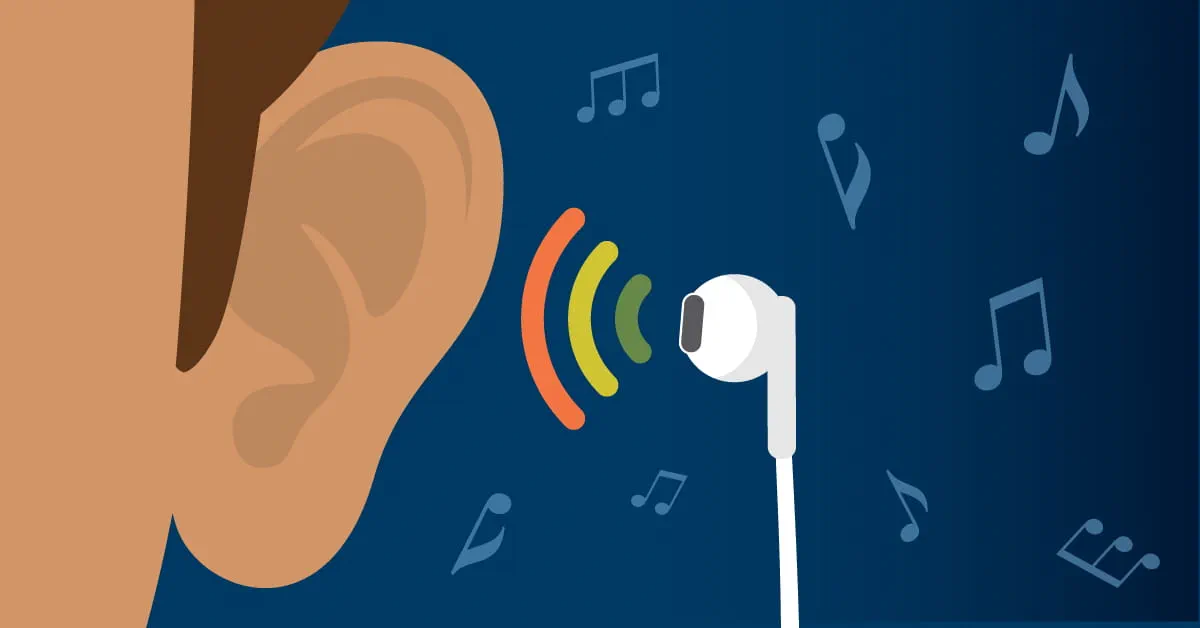
The mechanism is proximity plus volume. Headphones and earbuds sit closer to — or directly inside — the ear canal than almost any other everyday noise source, which means the sound energy reaching your eardrum is more concentrated than the same volume playing through a room speaker. There’s no need for alarm here; it simply means the margin for error is smaller.
Three variables interact to determine risk:
- Volume — how high the output is set.
- Duration — how many total hours per week you’re exposed.
- Proximity/device type — in-ear buds sit closer to the eardrum than over-ear headphones, which is why the same displayed volume can feel — and measure — louder through earbuds.
The World Health Organization (WHO), working with the International Telecommunication Union (ITU) on its “Make Listening Safe” initiative, frames this as a “sound allowance”: a combination of level and time that keeps total noise exposure within a safe weekly budget, rather than a single volume number to avoid.
Safe Listening Levels: What the Guidelines Actually Say
Different health bodies express the limit slightly differently, but they converge on the same general zone.
Put plainly: 85 dB is the point most public health guidance treats as the ceiling for extended daily exposure. Many headphones can exceed that at 60–70% of their maximum volume, and some go well past 100 dB at full volume — loud enough that permanent damage is possible in under 15 minutes, based on NIOSH’s exposure-time tables.
The “60/60 Rule”
A commonly cited practical guideline — used by hearing health organizations rather than being a formal WHO number — is to keep the volume at 60% of the device’s maximum and listen for no more than 60 minutes at a stretch before taking a break. It’s not a scientifically precise cutoff, but it’s a reasonable, easy-to-remember habit that keeps most listening sessions inside a safer range for most devices.
Earbuds vs. Over-Ear Headphones: Does the Type Matter?
Device type does appear to matter, mainly because of where the sound is delivered relative to the eardrum.
- In-ear earbuds sit inside or at the entrance of the ear canal. At the same displayed volume, this proximity generally means more sound pressure reaches the eardrum compared with headphones sitting outside the ear.
- Over-ear and on-ear headphones sit further from the eardrum, which tends to reduce the sound pressure delivered at an equivalent volume setting.
- Noise-cancelling headphones (active or passive) block outside noise, which matters because a lot of unsafe listening happens as people unconsciously raise the volume to compete with background noise — on a train, at the gym, on a flight. Blocking that background noise means you often need less volume to hear clearly.
This doesn’t mean earbuds are unsafe by definition. It means the volume habits that are fine with over-ear headphones may need to be a notch lower with earbuds, and that a good physical seal (whether from foam tips or a well-fitted design) does double duty: it protects hearing indirectly by reducing the urge to turn the volume up.
Beyond Hearing Loss: Other Ear Health Effects
Hearing loss gets most of the attention, but headphone use is linked to a few other ear health issues worth knowing about:
- Tinnitus. A ringing, buzzing, or hissing sound in the ears that can follow loud noise exposure. It’s sometimes temporary after a single loud session (a concert, a very loud track) and sometimes becomes persistent with repeated exposure. Persistent tinnitus is one of the more common early warning signs of noise-induced damage.
- Cerumen (earwax) buildup and irritation. In-ear earbuds can push earwax deeper into the canal or trap moisture and warmth that some people find increases irritation or a sense of fullness. This is a comfort and ear-canal hygiene issue rather than a hearing-damage mechanism, but it’s a common complaint among frequent earbud users.
- Ear infections. Sharing earbuds, or using them for long stretches without cleaning them, can introduce bacteria into a warm, enclosed ear canal environment. This is more of a hygiene consideration than a “headphones are dangerous” issue — it comes down to keeping earbuds clean and not sharing them.
- Temporary threshold shift. After a loud listening session, you may briefly find sounds seem muffled, or you feel like your ears are “full.” This is usually temporary, but repeated temporary shifts over months or years are associated with a higher chance of permanent hearing loss, since each episode reflects hair cells under stress.
Who Is Most at Risk?
Not everyone faces the same level of risk from headphone use, and understanding who’s more exposed helps put the guidance in context.
- Teens and young adults tend to have the longest daily listening hours and the highest tolerance for loud volume, which combines duration and intensity — the two variables that matter most.
- Commuters and gym-goers are a specific risk group because they’re listening in noisy environments (traffic, trains, machines) and instinctively raising volume to compensate, often without realizing how loud they’ve gone.
- People who already have some hearing loss may unintentionally turn the volume up further to compensate, accelerating further damage.
- Children, whose ear canals and auditory systems are still developing, are given a lower recommended safe volume by WHO guidance (75 dB vs. 80 dB for adults) specifically because their hearing is more vulnerable to the same exposure.
None of this means these groups should avoid headphones. It means volume awareness matters more for them than for someone who listens occasionally at low volume.
Benefits of Headphones Worth Acknowledging
It’s worth being fair to headphones themselves — used sensibly, they’re not a health hazard, and they offer real value:
- They let you listen privately without disturbing others, which matters in shared spaces, offices, and public transport.
- Good noise-cancelling designs can actually reduce the need for higher volume by blocking competing background noise.
- For some people with mild hearing difficulty, certain headphones with adjustable EQ or “hearing assist” features can make speech and audio more accessible, not less.
- They’re a practical tool for focus, exercise motivation, language learning, and accessibility (audiobooks, screen readers, captions paired with audio).
The goal isn’t to avoid headphones. It’s to use them the way most safety guidance frames any noise exposure: manage the loudness and the duration, and give your ears recovery time.
Practical Tips to Protect Your Hearing
- Use the 60/60 approach as a default. Keep volume around 60% of maximum, and take a break after about an hour of continuous listening.
- Check your phone’s built-in safety tools. Most smartphones now include a way to see your average headphone volume in decibels and set a maximum output level — it’s worth turning this on rather than guessing.
- Choose noise-cancelling or well-sealed headphones if you often listen in loud environments, so you’re not compensating for background noise by cranking the volume.
- Give your ears silent recovery time. If you’ve had a loud session — a concert, a loud commute — try to give your ears a few hours of quiet afterward rather than immediately following it with more high-volume listening.
- Watch for warning signs. Ringing in the ears, muffled hearing after a listening session, or needing people to repeat themselves more often are all signals worth paying attention to, not ignoring.
- Keep earbuds clean and avoid sharing them, to reduce the chance of ear canal irritation or infection.
- If you’re a parent, consider volume-limiting headphones for kids, but check the actual limit — many marketed as “safe for kids” cap out at 85 dB, which is the adult workplace limit, not a pediatric one.
Common Mistakes People Make
- Judging volume by feel instead of a number. “It doesn’t sound too loud” isn’t a reliable gauge, especially with good headphones that make loud sound feel clean and comfortable rather than harsh.
- Turning up volume to mask background noise instead of using noise-cancelling headphones or simply moving to a quieter spot.
- Assuming quieter genres are automatically safe. Volume, not genre, is what matters — a quiet-sounding podcast played too loud carries the same risk as loud music at the same decibel level.
- Ignoring early symptoms. Occasional ringing after a loud session is often dismissed as normal, when it’s actually a sign that hearing was pushed past a safe point.
- Using max volume on flights or in traffic to overcome ambient noise, which is one of the most common ways people unknowingly rack up unsafe listening hours.
When to Seek Professional Help
Consider seeing a doctor or audiologist if you notice any of the following, since these can be early signs of hearing damage or an unrelated but treatable ear issue:
- Ringing, buzzing, or hissing in the ears that doesn’t go away after a day or two
- Sounds seeming muffled or “underwater,” especially if it persists
- Needing to ask people to repeat themselves more often, or turning up the TV/phone volume more than you used to
- Ear pain, discharge, or a feeling of fullness that doesn’t resolve
- Sudden hearing loss in one or both ears — this warrants prompt medical attention rather than a wait-and-see approach
A hearing test (audiogram) is a straightforward, non-invasive way to get an objective picture of where your hearing stands, and many hearing health organizations recommend an annual check for anyone who listens to headphones regularly or works in a noisy environment.

Frequently Asked Questions
Do headphones cause permanent hearing loss?
They can, but it’s the volume and duration of use that causes damage, not headphones themselves. Listening at high volume for extended periods, especially above roughly 85 dB, can permanently damage the hair cells in the inner ear over time.
Is it safer to use over-ear headphones instead of earbuds?
Over-ear headphones generally deliver less sound pressure to the eardrum than earbuds at the same volume setting, since earbuds sit closer to or inside the ear canal. Both are safe when volume and duration are managed well.
How loud is too loud for headphones?
As a practical guide, if you can’t hear someone talking to you from an arm’s length away while wearing your headphones, or if someone else can hear your music from across the room, the volume is likely too high.
Can headphone-related hearing damage be reversed?
Noise-induced hearing loss from damaged inner-ear hair cells is generally permanent, since these cells don’t regenerate. Some short-term effects, like temporary muffled hearing after a loud session, do resolve — but repeated episodes raise the risk of permanent damage.
Are noise-cancelling headphones better for hearing health?
They can help indirectly. By blocking background noise, they reduce the temptation to raise volume to “beat” ambient sound, which is one of the more common ways people end up listening louder than they realize.
How often should I get my hearing checked?
There’s no single universal rule, but hearing health organizations commonly suggest an annual hearing check for people who listen to headphones regularly, work in noisy settings, or have noticed any early warning signs like tinnitus.
Key Takeaways
- Hearing damage from headphones comes from loudness and duration, not the devices themselves.
- WHO guidance suggests keeping listening under about 80 dB for adults (75 dB for children) across 40 hours a week; NIOSH’s occupational limit is 85 dB for 8 hours.
- The 60/60 rule (60% volume, 60-minute sessions) is a practical, easy-to-follow habit.
- Earbuds tend to deliver more sound pressure to the eardrum than over-ear headphones at the same volume.
- Tinnitus, muffled hearing, and needing people to repeat themselves are early warning signs worth acting on.
- Noise-induced hearing loss is largely preventable — and, once it happens, generally not reversible.
Conclusion
Headphones aren’t inherently bad for your ears — millions of people use them daily without ever damaging their hearing. The real variables are volume and time, and both are within your control. A simple habit like keeping the volume around 60% of maximum, taking listening breaks, and paying attention to early signs like ringing or muffled hearing goes a long way toward keeping your hearing intact for the long run. If something doesn’t feel right — persistent ringing, muffled hearing, or ear discomfort — it’s worth getting checked rather than waiting it out.