
Written by Vardan Patel
Co-Creator & Health and Fitness Content Creator at FitHub 365
Vardan combines his personal experience with exercise and healthy lifestyle habits with research from reputable health organizations and scientific sources to create practical, beginner-friendly health and fitness content.
Key takeaways
- There’s no single cause. Low movement, ultra-processed diets, short or irregular sleep, stress and substance use tend to add up together.
- The best global data on young people’s activity is from surveys, and it still shows most adolescents are not active enough.
- Many links between lifestyle and disease come from observational studies, which show association, not proof of cause.
- Small, repeatable habits matter more than dramatic overhauls, and they don’t require a gym or expensive food.
- Persistent symptoms, or a low mood that doesn’t lift, deserve a conversation with a doctor or qualified professional.
Why Young People Are Facing Frequent Health Problems
If you’re in your teens or twenties and often feel tired, low or unwell, you might wonder whether it’s just you. Plenty of parents and young adults ask the same thing: why do younger people seem to be dealing with problems that once showed up much later in life?
The short answer is that several everyday patterns have shifted at once. Many young people sit more, move less, eat more ultra-processed food, sleep at odd hours and spend large parts of the day on screens, often under academic or career pressure. None of these alone explains everything. Together, they make a body and mind that’s under more strain than it looks.
A note on terms: “youth” means different things in different places. WHO’s adolescent data covers ages 10–19, and the United Nations commonly defines youth as 15–24. This article draws on both, and says so when a statistic applies to a specific age band.

First, what do we mean by “frequent health problems”?
It’s worth being careful here. Some conditions are genuinely becoming more common among younger people, particularly metabolic risk factors such as weight gain around the waist and raised blood sugar. Other things are simply being noticed and diagnosed more often than before, which can make a trend look steeper than it is. Mental health is a good example: more awareness means more young people are recognised, and that’s a good thing even when the numbers look alarming.
On mental health, WHO estimates that around one in seven 10–19-year-olds experiences a mental disorder, and many of these conditions go largely unrecognised and untreated. That gap between having a problem and getting help is part of the story too. who
Moving less than the body expects
Movement is probably the clearest example. A WHO-led analysis, published in The Lancet Child & Adolescent Health, drew on school surveys of about 1.6 million students aged 11–17 in 146 countries, collected between 2001 and 2016. It found that 81% of them did not meet the WHO recommendation of at least an hour of daily physical activity. The picture was uneven between the sexes: only 15% of girls reached the recommended amount, compared with 22% of boys. inquirerinquirer
Two caveats are worth keeping in mind. These are survey responses, not measured activity, and the data stops in 2016, so current numbers could differ. The researchers also didn’t test why activity was low. They suggested that screens may be encouraging more sitting, and the authors also pointed to poor infrastructure and safety concerns that make it hard to walk or cycle to school. udayavani
For context, WHO’s guidance is that children and adolescents should average at least 60 minutes a day of moderate-to-vigorous, mostly aerobic activity, while adults should aim for 150–300 minutes of moderate-intensity activity per week. WHO also stresses that any amount of activity is better than none, all kinds of movement count (including walking, cycling and household tasks), and too much sedentary time can raise the risk of heart disease, cancer and type 2 diabetes. nihwho
That last point matters for people with desk-bound study or work lives. A morning run doesn’t fully cancel out eight hours in a chair, so breaking up sitting time is useful even if you’re also exercising.

What’s on the plate
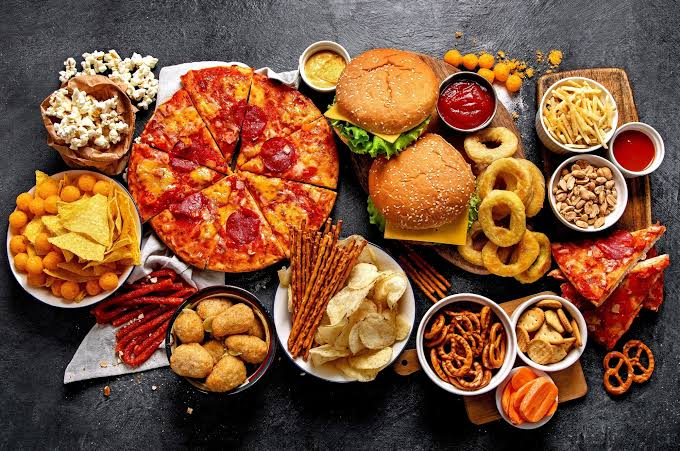
Food habits have changed as well, especially the growing share of ultra-processed food: packaged snacks, sugary drinks, instant noodles, many ready-to-eat meals and fast food. These are industrially formulated products that tend to be energy-dense and easy to overeat.
The strongest recent overview is a 2024 umbrella review in The BMJ, which pooled 45 meta-analyses covering almost 10 million people. It found direct associations between ultra-processed food exposure and 32 (71%) of the health outcomes examined, spanning mortality, cancer, and mental, respiratory, cardiovascular, gastrointestinal and metabolic health. The links were strongest for cardiometabolic outcomes, common mental disorders and mortality. bondbond
Here’s what that does and doesn’t tell you. It’s an association, mostly from observational studies. People who eat lots of ultra-processed food often differ in other ways too: income, sleep, activity, stress. So it doesn’t prove that a packet of biscuits causes diabetes. It does make a reasonable case for eating them less often.
India offers a useful local snapshot, with a limit: the ICMR-INDIAB study surveyed adults over 20, not teenagers. It reported that more than 100 million Indians live with diabetes and about 136 million have prediabetes. The same study found abdominal obesity in around 39.5% of people surveyed. Many of those adults were young when their habits formed, which is why researchers see the large prediabetes group as a window of opportunity for prevention. non communicable diseases in india +2
Sleep, screens and stress
This is the area where everyday experience is easiest to recognise and where hard numbers are harder to pin to a single source, so the claims here stay general. Many young people sleep late for study, work or social media and then wake early for a commute or class. Sleep affects mood, concentration, appetite and recovery, so a chronic shortfall can quietly worsen almost everything else on this list.
Screens complicate things in two ways. They can displace sleep and movement, and they can add social pressure. WHO lists media pressure, peer relationships and the quality of home life among the factors that shape adolescent mental health. Research on screen time and wellbeing is mixed, though, and it’s not accurate to say that phones alone cause poor health. How the time is used, and what it replaces, seems to matter as much as the hours.
Academic and career competition adds another layer. Exam years, job insecurity and financial worries all raise baseline stress, and stress tends to push sleep, eating and activity in the wrong direction at once.

Substances and the environment
Alcohol, tobacco and vaping often begin in the teenage years. WHO data reported in news coverage of its 2025 update indicates that 22% of 15–19-year-olds consumed alcohol in 2019, with high rates of tobacco and cannabis use also reported. Early use can set up patterns that last into adulthood. dailydispatch
Air quality is another background factor, especially in large cities, though how much it contributes to health problems in young people specifically is harder to untangle from everything else. It’s worth knowing about without being treated as the sole explanation.
Easy-to-miss early signals
Many early problems don’t announce themselves clearly. Persistent tiredness, frequent headaches, ongoing low mood, increased irritability, unexplained weight change, and breathlessness on mild effort can all have ordinary causes. They can also be early signs of something worth checking, such as low iron, thyroid problems, raised blood sugar, depression or anxiety. This article can’t tell you which, and neither can a quiz online. If a symptom lasts more than a few weeks or keeps getting in the way of daily life, it’s a good reason to see a doctor.

Realistic changes that fit real life
Big resolutions tend to collapse by the second week. Smaller changes that fit into an existing routine usually last longer.
Add movement in pieces. Ten-minute walks after meals, taking stairs, cycling to a nearby place, or a short bodyweight routine at home all count towards the totals above. If you’re short on time or money, you don’t need a gym.
Make one food swap at a time. Roasted chana, a handful of nuts or a piece of fruit can replace a packet of chips on some days. Poha or upma with vegetables, idli with sambar, dal with roti or rice, and curd are all familiar, affordable options. Eggs, paneer, sprouts, lentils and tofu can all provide protein, depending on whether you eat meat, eggs, dairy or follow a vegan diet. You don’t have to give up street food or sweets entirely. The aim is to make them occasional rather than the base of the day.
Protect a sleep window. Pick a realistic bedtime and wake time and keep them within an hour or so, including weekends where possible. Putting the phone outside arm’s reach can help, but it won’t work for everyone, and it’s fine to adjust.

Build a stress release you actually enjoy. Walking, music, a hobby, journaling or time with friends are all reasonable. Choose what you’ll actually do.
Talk to someone. If worry or low mood has been around for a while, speaking with a trusted adult, school counsellor or a qualified mental health professional isn’t an overreaction.
For illustration only: picture a student who sits through lectures, studies late, snacks on packaged food and scrolls in bed. Changing every habit overnight is unrealistic. A more believable first step is a 15-minute walk after dinner and a fixed phone-down time. Once that feels normal, a second change can be added.
What not to expect
Habits aren’t a guarantee. Healthy routines lower risk, but genetics, family history, income, access to healthcare and environment all play a part, and some young people with excellent habits still develop health conditions. Equally, no single food, workout or supplement will “fix” a complicated problem.
People with existing conditions, those taking medication, those who are pregnant, and anyone with a history of injury or disordered eating should check with a doctor or dietitian before making big changes to diet or exercise.
FAQs
Are young people really less healthy than previous generations?
It depends on what you measure. Several risk factors, such as physical inactivity and metabolic problems, are widely reported as concerning, and mental health is more openly recognised. Part of the apparent rise also reflects better detection, so the picture is mixed rather than uniformly worse.
Is screen time the main cause?
Probably not on its own. Research on screens and health is mixed. They may matter mostly by displacing sleep and movement, and through social pressure, rather than by directly damaging health.
How much exercise do I actually need?
WHO’s guidance is an average of 60 minutes a day of moderate-to-vigorous activity for ages 5–17, and 150–300 minutes a week of moderate activity for adults. If you’re far from that, start with whatever you can manage and build up gradually.
Do I have to quit junk food completely?
No. The evidence points to a pattern of eating, not to one snack. Reducing how often ultra-processed foods dominate your day is more realistic than banning them.
When should I see a doctor?
Go if symptoms persist for weeks, get worse, or interfere with study, work or relationships. Seek help promptly for chest pain, fainting, severe breathlessness, or any thoughts of harming yourself.
Conclusion
Young people’s health problems rarely come from one bad habit. They build up from low movement, convenience-heavy eating, short sleep, stress and, for some, substance use, in settings where healthy choices aren’t always easy or affordable. The encouraging part is that most of these patterns respond to small, steady changes.
If you take one thing from this article, let it be this: pick a single change, like a daily walk or a fixed bedtime, and keep it going for a few weeks before adding anything else. And if something feels off for longer than you’d expect, get it checked rather than waiting it out.