
Written by Teerth Busa: Health & Fitness Content Writer
Teerth Busa researches exercise, fitness, nutrition, mental well-being, and healthy lifestyle topics using reputable health organizations and scientific sources. His content is written to make health and fitness information simple, practical, and easy to understand.
How to Reduce Social Media Use and Improve Your Focus
You sit down to study, or to finish a work report, and pick up your phone “just to check one thing.” Twenty minutes later you’ve watched a dozen Reels, replied to three group chats and forgotten what you were supposed to be doing. If that sounds familiar, you’re in very large company, and it doesn’t mean you lack discipline.
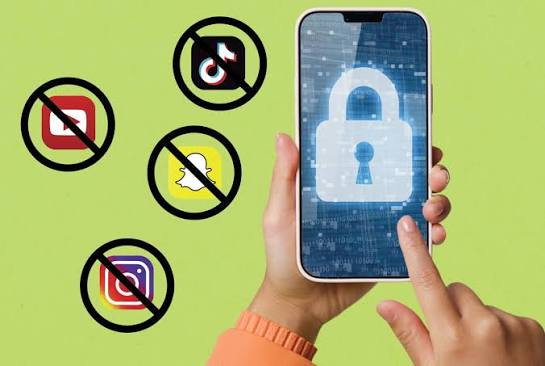
The short answer to the main question is this: yes, cutting back on social media can help your focus and, for some people, your mood. The best-supported way to do it is not a dramatic detox but a set of small changes. Switch off most notifications, put friction between you and the apps, give your phone a place to live during focused work, and replace the scrolling with something you actually enjoy. This article explains what the research does and doesn’t show, then walks through a practical plan you can start today.

Key Takeaways
- Controlled experiments suggest that limiting social media, or taking a short break, can improve well-being for some people. Most of these studies are small and short, so treat them as encouraging rather than final.
- Notifications can disrupt concentration even when you don’t touch the phone, so turning them off is one of the highest-value changes.
- The idea that a phone on your desk drains your brainpower has not held up well in replication attempts. Fewer interruptions matter more than where the phone lies.
- Gradual limits and swaps usually last longer than deleting everything at once.
- Persistent low mood, anxiety or loss of control over your use deserves a conversation with a qualified professional.
Why Social Media Pulls at Your Attention
Most social platforms are designed to keep you watching. Endless feeds have no natural stopping point, autoplay starts the next video before you decide whether you want it, and notifications are timed to bring you back. None of that is a character flaw on your part. It is simply how the products are built.
The cost shows up in small moments. Your attention is a limited resource, and every switch between tasks has a price. You read two lines of your textbook, glance at a notification, and then need a minute to find your place again. Do that thirty times in an afternoon and the lost time is much larger than the minutes you spent on the app.
It also helps to separate two different problems that people often lump together:
- Time spent. How many hours the apps take from your day.
- Fragmented attention. How often your thinking is interrupted, even by short checks.
Someone who spends 40 minutes on Instagram during a train ride may be fine. Someone who spends the same 40 minutes in 80 tiny glances scattered across a workday may find it much harder to concentrate. Both are worth looking at, but they need slightly different fixes.
What the Research Actually Shows
This is a topic where headlines tend to be louder than the evidence, so it’s worth being specific.
Evidence that cutting back may help well-being
In a 2018 experiment by Melissa Hunt and colleagues at the University of Pennsylvania, 143 undergraduate students were randomly assigned either to use Facebook, Instagram and Snapchat as usual or to limit each to about 10 minutes a day, roughly 30 minutes in total, for three weeks. The group that limited their use reported lower loneliness and lower depression scores than the control group. The researchers noted that the benefit was strongest in students who started out with higher depression scores, and they said the study could not explain exactly why the change happened. It was published in the Journal of Social and Clinical Psychology.
A 2022 randomized trial from the University of Bath went further in the other direction. It assigned 154 adults, aged 18 to 72, to stop using Facebook, Instagram, Twitter and TikTok for one week or to carry on as normal. After the week, the break group showed better well-being and lower depression and anxiety scores. The effect on well-being appeared to be partly linked to the drop in time spent on the platforms. The university also hosts a record of the paper.
Why you should hold these findings loosely
Both studies are genuinely useful because they are experiments, not just surveys, so they say more about cause and effect than studies that simply compare heavy and light users. But there are limits:
- The Pennsylvania study used university students over three weeks. The results may not apply equally to teenagers, older adults or people with very different routines.
- The Bath study lasted one week. Reviewers have pointed out that volunteers who sign up for a social media break may already be motivated to benefit from it, and that we don’t yet know whether the gains last or how realistic a full break is for most people.
- Participants knew which group they were in, so expectations could have shaped how they felt.
- Social media isn’t one thing. Chatting with a close friend, following a fitness coach and doom-scrolling a comment section are very different activities, and the research can’t always tell them apart.
A fair reading is that reducing use is a reasonable experiment to run on yourself, especially if you notice your mood or concentration slipping. It is not a guaranteed cure for anything.
Notifications, phones and focus
The attention evidence is clearer for notifications. In a 2015 study at Florida State University, participants did an attention task while their own phones received a call or text alert, which they were not told would be coming. People who received alerts made noticeably more errors on the task than those who didn’t, even when they didn’t pick up the phone. The researchers suggested that alerts trigger mind-wandering.
You may also have read that simply having your phone on the desk reduces your thinking capacity, an idea known as the “brain drain” effect, first reported in 2017. It’s worth being cautious here. Later attempts to repeat the experiment, including a pre-registered replication published in 2022, did not find the same result. The sensible takeaway is not that your phone’s location is irrelevant, but that interruptions and the urge to check are the better-supported problem. Putting the phone in a bag is still a useful habit because it removes the temptation, even if the “drain” itself is unproven.
A Practical Plan to Reduce Social Media Use
You don’t need to do everything below. Choose two or three steps, try them for a couple of weeks, and then adjust.
Step 1: Look at your real numbers first
Before changing anything, check what you’re actually doing. Android phones have Digital Wellbeing and iPhones have Screen Time, and both show daily totals per app and how many times you picked up your phone. Look at a typical week, not one unusual day. Many people are surprised by the pickup count more than the minutes.
Then ask yourself a simple question about each app: does it leave me feeling better or worse afterwards? Keep the ones that help you stay in touch with people or learn something. Be honest about the ones that mainly eat time.
Step 2: Turn off the notifications you didn’t ask for
This is the quickest win. Go through your settings and switch off alerts for likes, new followers, suggested videos, “someone you may know” and promotional messages. Keep alerts for direct messages from people you actually need to hear from, such as family or your manager.
Group chats deserve special attention, especially in India where a single WhatsApp group can produce hundreds of messages a day. Muting a class, society or extended-family group doesn’t mean you’re ignoring anyone. It means you read it when you choose to, perhaps once at lunch and once in the evening.
Step 3: Add a little friction
Willpower works best when it isn’t asked to win a fight every five minutes. Small obstacles help:
- Move social apps off your home screen, or into a folder on the last page.
- Log out after each session so opening the app takes a few extra seconds.
- Use the built-in app timers to set a daily limit, or use the browser version instead of the app, which is usually less sticky.
- Try greyscale mode if your phone has it. Colour makes feeds more appealing, and removing it makes them a bit duller.
A timer isn’t a punishment. Treat it as a prompt that asks, “Do I still want this?” You can always continue if the answer is yes.
Step 4: Give your phone a home
When you need to concentrate, whether that’s studying, writing, cooking a proper meal or working out, leave the phone in another room or in a bag. Given the mixed research on the “brain drain” effect, don’t think of this as a scientific trick. It’s just easier not to check a phone you can’t reach.
If you need your phone for music or a timer, switch on Do Not Disturb or a Focus mode that lets calls from key contacts through and silences everything else. Pair it with a simple structure, like 25 to 45 minutes of focused work followed by a short break, and check your messages during the break instead of in the middle.
Step 5: Protect the edges of the day
The first and last half-hour of the day are where many people lose the most time without noticing. If your phone is the first thing you reach for, try charging it across the room and using a basic alarm clock or a regular alarm that you have to stand up to switch off.
In the evening, many people find that late-night scrolling makes it harder to wind down, and it can push bedtime later than planned. The research on exactly how phone use affects sleep is mixed and depends on what you’re doing on the device, so rather than following a rigid rule, notice how you feel. If you sleep poorly, try keeping the phone out of reach for the last 30 to 60 minutes before bed and see whether anything changes.
Step 6: Replace, don’t just remove
If you take away a habit and leave an empty space, scrolling tends to creep back. Decide in advance what you’ll do instead, and make it easy:
- Waiting time at a bus stop, in a queue or in a lift: listen to a podcast or music you’ve downloaded, or simply look around. Boredom is allowed.
- Short breaks at work or study: stand up, stretch, drink water or have your chai away from the screen. A five-minute walk does more for focus than another five minutes of Reels.
- Evenings: a book, a game of cards or carrom with family, a call to a friend, or a longer walk. Movement fits neatly here, and the World Health Organization notes that regular physical activity has significant benefits for both physical and mental health.
- Weekends: plan one screen-light activity, such as cycling, a badminton session, cooking or visiting someone in person.
This is where fitness and lifestyle changes support each other. People who build a regular walking or exercise habit often find they have less appetite for mindless scrolling simply because the time is already spoken for.
Step 7: Try a short break, then decide
If you’re curious about how you’d feel with less social media, borrow the idea from the research. Pick a period you can realistically manage, perhaps a weekend or a week, and step away from the platforms you suspect you use most. Note down your mood, sleep and concentration at the start and end. Then decide what to bring back.
You don’t have to follow the exact rules of any study. Some people need to stay on WhatsApp for work or family reasons, and that’s fine. Remove the optional apps and keep the necessary ones.
A Realistic Sample Day
This is an illustration, not a prescription. Adjust it to your own schedule.
| Time | Habit |
|---|---|
| Morning | Alarm across the room. Have water, stretch or eat breakfast before checking messages. |
| Study or work block | Phone in a bag. Notifications limited to calls from key people. Work in focused stretches with a short break between. |
| Lunch | One planned check of messages and the apps you enjoy, with a set timer. |
| Afternoon | Another focus block. Take your breaks away from the screen. |
| Evening | Walk, exercise or time with people. Check social apps once, intentionally. |
| Night | Phone charging away from the bed if possible, with an offline wind-down such as reading. |
Common Mistakes and Fixes
- Going cold turkey, then bingeing. If a total ban collapses within three days, switch to smaller limits instead of treating it as a personal failure.
- Moving the habit, not changing it. Replacing Instagram with endless YouTube Shorts doesn’t change the pattern. Judge the behaviour, not the app.
- Ignoring the reason you scroll. Boredom, stress, loneliness and procrastination each need a different response. If you mainly scroll when you feel anxious, a walk or a conversation will work better than a timer.
- Expecting instant results. Concentration usually improves gradually. Give a new routine at least a couple of weeks before judging it.
- Being harsh with yourself. Shame tends to bring more scrolling. Treat slips as information.
When to Seek Professional Support
Reducing social media is a self-help step, not a treatment. Consider talking to a doctor, counsellor or psychologist if any of these apply:
- You feel persistently sad, anxious, hopeless or numb for more than a couple of weeks.
- You try repeatedly to cut back but can’t, and your use is affecting school, work, sleep or relationships.
- Your online use is tied to bullying, harassment, or comparison that is seriously damaging your self-esteem.
- You are having thoughts of harming yourself.
In India, Tele-MANAS is a government-run, free helpline offering mental health support around the clock in multiple languages. You can reach it at 14416 or 1-800-891-4416. If you are in immediate danger, contact local emergency services. Readers elsewhere can look for a national or local helpline or speak with a family doctor.
Parents of children and teenagers may also want to look for age-specific guidance from paediatric or child-health organizations, because this article is written mainly for adults and older teens.
Frequently Asked Questions
How much social media is too much?
There’s no single scientifically agreed number. The Pennsylvania experiment used about 30 minutes a day across three platforms and found benefits in that group, but it doesn’t prove that 31 minutes is harmful or that 30 is ideal for everyone. A better test is practical: does your use leave you feeling worse, cut into sleep, work or relationships, or feel hard to control? If yes, it’s too much for you.
Do I have to delete my accounts?
No. Many people do well simply by removing notifications, adding limits and being selective about which apps stay on their phone. Deleting is an option if you find that you can’t use an app moderately, but it isn’t required for most people.
Will reducing social media definitely improve my mood?
Not definitely. Some experiments show improvements in well-being, depression and anxiety scores, particularly in people who already had higher symptoms, but results vary and most studies are short. If your mood is low for reasons unrelated to social media, cutting back alone won’t solve it, and professional support may still be needed.
How long before my focus improves?
It varies. Some people notice fewer distractions within days of switching off notifications, while rebuilding the habit of sustained attention can take several weeks of consistent practice. Research on how long focus benefits last is limited, so judge by your own results rather than a fixed timeline.
Is a phone on my desk really bad for concentration?
The popular claim that a nearby phone drains your thinking ability has not been reliably reproduced. What is better supported is that notifications and the urge to check can interrupt attention. If a phone out of sight helps you resist checking it, keep doing that.
What if I need social media for work or my business?
Then aim to use it deliberately instead of constantly. Schedule set times for posting and replying, use a separate browser profile or a scheduling tool if possible, and keep personal scrolling away from the same device or account where you can.
Conclusion
Cutting down on social media is less about willpower and more about changing your environment so that focus becomes the easier option. The evidence suggests that limiting your use or taking a break can improve well-being for some people, and that fewer notifications can reduce interruptions, though the studies are small and short and shouldn’t be treated as guarantees.
You don’t need to overhaul your life this week. Start with two things: switch off non-essential notifications today, and choose one block of the day when your phone stays out of reach. Notice how you feel after two weeks, then keep what works and drop what doesn’t. If your mood or sense of control doesn’t improve, that is a good moment to talk with a professional.