
Written by Teerth Busa: Health & Fitness Content Writer
Teerth Busa researches exercise, fitness, nutrition, mental well-being, and healthy lifestyle topics using reputable health organizations and scientific sources. His content is written to make health and fitness information simple, practical, and easy to understand.
KEY TAKEAWAYS
- Sleep is the most dependable foundation. Short sleep hits sustained attention harder than most other mental skills.
- Movement gives a small, short-term lift to mental performance. It won’t transform your focus, but it helps and costs almost nothing.
- Caffeine can sharpen alertness, but it can also wreck the sleep your focus depends on.
- Some popular ideas, like “a phone on your desk drains your brain,” have weaker evidence than the headlines suggest.
- Trouble concentrating that is lifelong, severe, or affects work, study or relationships is worth discussing with a doctor.
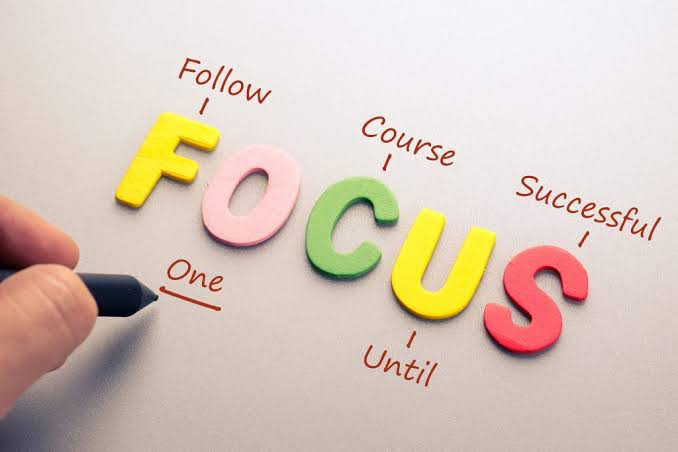
How to Improve Focus and Concentration Naturally
You sit down to read one email. Forty minutes later you’ve checked three apps, refilled your water, and still haven’t answered it. Most people recognise that, and it rarely means something is wrong with you.
There’s no single trick that fixes focus. For most healthy adults, concentration improves through a handful of ordinary things: enough sleep, regular movement, sensible caffeine, fewer interruptions, and tasks arranged so your attention isn’t fighting uphill. Some of these have strong evidence and some don’t. This guide separates the two, gives you a realistic way to start, and explains when poor concentration deserves a medical conversation instead of another productivity hack.
What “focus” actually involves
“Focus” is really several skills. Sustained attention is staying with one task for a while, like reading a chapter. Selective attention is ignoring distractions, like studying while the TV plays in the next room. Working memory is holding information in your head while you use it, like carrying a number through mental arithmetic.
This matters because the fixes differ. Sleep loss mostly damages sustained attention. A noisy home mostly attacks selective attention. And every brain has natural dips during the day, so expecting unbroken concentration for eight hours is unrealistic.
Start with sleep, even though it’s unexciting
If you change only one thing, change this. CDC guidance for adults is seven or more hours a night, and too little sleep is linked with a variety of health problems and can affect mental alertness. A CDC survey found that more than a third of American adults aren’t getting enough sleep on a regular basis, so if you’re short on sleep, you have plenty of company. cdcishn
The research on attention is unusually clear. A meta-analysis of short-term sleep deprivation studies found the largest effect on lapses in simple attention, which showed a large effect, while accuracy on reasoning tasks showed only a small, non-significant one. Put plainly, when you’re underslept you don’t necessarily think worse. You drift off task more often and for longer. nih
Some practical points:
- Protect a consistent wake-up time first. It’s easier to hold than a bedtime, and a regular wake time tends to pull bedtime into line.
- Notice the late-night phone habit. Scrolling in bed is a common reason people lose an hour they thought they’d keep. You don’t have to ban it, but pick a cut-off you can actually stick to.
- Be realistic about catching up. Weekend lie-ins can ease a bad week, but they aren’t a substitute for regular sleep.
Loud snoring, gasping at night, or feeling exhausted despite a full night’s sleep can point to a sleep disorder. That’s a reason to see a doctor, not to try harder.
Move your body, and don’t overthink it
A single bout of exercise appears to give a short-lived mental boost. A meta-analysis of 113 studies with 4,390 healthy adults aged 18 to 45 found a small but significant positive effect on overall cognitive performance from a single exercise session. Smaller reviews are more cautious. One on set-shifting concluded the effects are small, which makes their everyday relevance questionable. psypostfrontiersin
So a ten-minute walk before a hard task is worth trying, but don’t expect it to work miracles. Its bigger value is that regular activity is good for you anyway. WHO’s guidance for adults is 150–300 minutes of moderate-intensity activity per week, or 75–150 minutes of vigorous activity, or an equivalent mix. WHO also notes that some activity is better than none. uea
If that sounds like a lot, break it down. A brisk 20-minute walk after lunch, taking the stairs, cycling to work, a short home workout, or a game of cricket or badminton with friends all count. You don’t need a gym.
Caffeine: useful tool, easy to overdo
Tea and coffee are part of daily life for many readers, including a lot of us in India, and in moderation they’re fine. For most adults the FDA cites about 400 milligrams a day as an amount not generally linked to negative effects. That figure isn’t universal. The FDA says “too much” varies with body weight, medications, medical conditions and individual sensitivity. healthlinefda
The catch for focus is the sleep loop. Mayo Clinic describes a familiar cycle: people use caffeine to stay awake through the day, but the caffeine then makes it harder to fall asleep at night, so they sleep less and feel more tired the next day. mayoclinic
Ways to keep caffeine on your side:
- Have your last cup well before the evening. How early depends on how sensitive you are, so experiment.
- Watch hidden sources: energy drinks, cola, some pain-relief tablets and strong chai all add up. FDA figures show energy drinks and brewed coffee vary widely in caffeine content. fda
- If jitters, a racing heart, or anxiety show up, cut back gradually.
- If you’re pregnant, have a heart condition, or take regular medication, ask your doctor what’s right for you.
Shape your surroundings so focus takes less willpower
Much of what looks like a concentration problem is really a setup problem. If your phone buzzes every few minutes, you’ll struggle however disciplined you are.
Here the evidence is more mixed than popular articles admit. A well-known 2017 study suggested that merely having your phone nearby reduces mental capacity. Later work has not supported it consistently. One meta-analysis of 33 studies with 4,368 participants found no significant overall effect of a phone’s mere presence on cognitive outcomes. Another found limited support for a negative effect on working memory only, with no clear effect on the other functions measured. jcuvu
That doesn’t prove phones are harmless. These studies tested a phone sitting silently on a desk, not notifications that interrupt you or the pull of opening an app on impulse. A reasonable reading is that silencing alerts and putting the phone out of reach is a sensible, free experiment, but there’s no strong proof that it works wonders.
Some things to try:
- Pick one task and say it out loud. “For the next 30 minutes, I’m only writing the report.” Switching between tasks makes everything feel harder.
- Use fixed work blocks with short breaks. Many people like 25 to 50 minutes of work followed by a five-minute break. This is a popular method rather than a rigorously proven one, so adjust it to what suits you.
- Tackle the hardest task when you feel sharpest. That might be early morning or late evening, depending on you.
- Quiet the obvious distractions. Turn off non-essential notifications, close extra tabs, and tell people at home you’re unavailable for an hour.
- Write down stray thoughts. Keep a notepad nearby, jot the thought, and return to work.
If you live in a crowded home with little privacy, perfect conditions aren’t realistic. Even a pair of earphones, a quieter corner, or working at a different time of day can help.
Training attention: what mindfulness can and can’t do
Mindfulness is often sold as a cure for a wandering mind. The evidence is encouraging but modest. A meta-analysis of 27 randomised trials in healthy adults found small positive effects on attention and executive control, with more in-class sessions linked to stronger results. A review that included studies with active comparison groups said the evidence for attention benefits is currently mixed. bslnih
So treat it as a low-cost habit that may help, not a guaranteed upgrade. Five minutes is enough to start. Sit comfortably, follow your breathing, and each time your mind wanders, gently bring it back. Noticing the wander and returning is the exercise, so a busy mind doesn’t mean you’re doing it wrong.
Food, water, and what’s oversold
Plenty of products claim to boost focus, from “brain foods” to supplements and powders.
- Eat regular meals built around ordinary foods you can afford: dal, vegetables, whole grains, curd, fruit, eggs or paneer if you eat them, and nuts or seeds.
- If you notice a heavy lunch leaves you sleepy, try a lighter portion for a week and see whether it helps you. This is a personal experiment, not a proven rule.
- Drink water through the day, especially if you feel foggy and have been sitting in the heat for hours.
- Skip anything that promises dramatic results or tells you to buy an expensive stack of pills. Talk to a doctor before taking supplements, particularly if you have a health condition or take medicines.
A simple first week
You don’t have to change everything at once. Pick two or three:
| Day | Small change to try |
|---|---|
| 1 | Fix a regular wake-up time and keep it all week |
| 2 | Take a 10–15 minute walk before your hardest task |
| 3 | Silence non-essential notifications for one work block |
| 4 | Cap caffeine at what suits you and stop earlier in the day |
| 5 | Try one 5-minute breathing exercise |
| 6 | Write down your single most important task before starting work |
| 7 | Review what helped, and keep only those habits |
When trouble concentrating needs more than lifestyle changes
Everyday distraction is normal. But concentration problems can have causes that willpower and habits won’t fix.
ADHD is one. The National Institute of Mental Health describes it as an ongoing pattern of inattention, hyperactivity and/or impulsivity, and notes that adults who are diagnosed had several symptoms before the age of 12 and currently show at least five persistent symptoms. The pattern has to make it hard to function in at least two areas of life, such as home, school or work. Only a qualified professional can diagnose it, and occasional distractibility doesn’t qualify. www.nimh.nih.gov +2
Anxiety, low mood, burnout, sleep disorders, and some medications can also make concentration harder. This article can’t tell you which, if any, applies to you. Consider seeing a doctor or mental health professional if:
- Concentration problems have lasted weeks or months and are getting worse
- They affect your job, studies, or relationships despite your best efforts
- You notice a sudden change, memory problems, confusion, or persistent low mood
- You’ve been sleeping well and still can’t concentrate
If you feel overwhelmed or hopeless, please reach out to a doctor or someone you trust soon.
Common mistakes
- Using caffeine to cover for sleep debt. It masks tiredness, then costs you sleep.
- Changing everything at once. Two small habits you keep beat ten you abandon.
- Blaming yourself. Self-criticism adds stress, which makes concentrating harder.
- Expecting all-day focus. Plan around natural dips instead of fighting them.
- Buying a fix. Apps, powders, and gadgets rarely beat sleep, movement and fewer interruptions.

Frequently asked questions
How long does it take to improve focus?
It varies. After a bad night, concentration can improve noticeably within days of better sleep. Changes from habits like exercise or mindfulness are usually gradual, and research shows only modest average effects, so judge progress over weeks, not days.
Does exercise really help concentration?
A little, and briefly. Studies find a small average boost after a single session. Its larger payoff is long-term health, which supports everything else.
Is coffee good or bad for focus?
Both, depending on the dose and timing. Moderate amounts help many adults feel alert. Too much, or too late in the day, can cause jitters and cost you the sleep your focus needs.
Does my phone hurt my concentration just by being nearby?
Evidence is mixed, and large reviews found little or no overall effect from mere presence. Notifications and impulsive checking are the more plausible problem, so silencing alerts is a sensible step.
Can I improve focus without apps or supplements?
Yes. Sleep, activity, fewer distractions and realistic task planning cost nothing, and they have better support than most paid products.
When is it more than ordinary distraction?
If problems are long-standing, severe, or interfere with daily life, speak with a doctor. They can check for causes like sleep problems, anxiety, low mood, or ADHD.
Conclusion
Better concentration rarely comes from one dramatic change. It comes from enough sleep, regular movement, caffeine that doesn’t undermine your nights, and a workspace that doesn’t keep interrupting you. Mindfulness may add a little. The most hyped ideas, from phone-in-another-room rules to “brain foods,” have weaker support than the internet suggests.
Pick two habits this week: a consistent wake-up time and one short walk before your hardest task. If your concentration stays poor despite that, or it’s affecting your life, see a healthcare professional. Struggling to focus is common, and help is available.