
Written by Teerth Busa: Health & Fitness Content Writer
Teerth Busa researches exercise, fitness, nutrition, mental well-being, and healthy lifestyle topics using reputable health organizations and scientific sources. His content is written to make health and fitness information simple, practical, and easy to understand.
How Often Should You Stretch? What Current Guidance Actually Says
Most of us stretch in bursts. We do it after a stiff night, after a long flight or bus ride, or when a sports teacher once told us to. Then weeks pass and we forget. So what’s the right rhythm?
The short answer: for general flexibility, aim to stretch the major muscle groups at least two to three days a week. Doing it more often, even daily, is likely to bring bigger gains. The rest of this article covers how long to hold a stretch, when to do it, and what stretching can’t do.
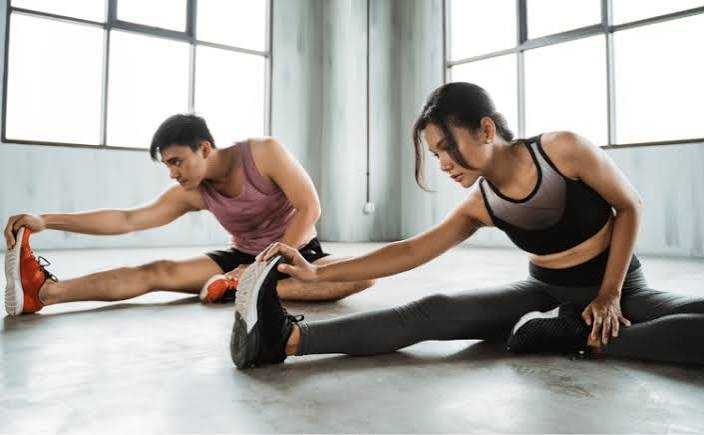
Key Takeaways
- Stretching two to three days a week is the standard minimum for improving flexibility, and daily is reasonable.
- Hold most stretches for 10 to 30 seconds and aim for about 60 seconds of total stretching per muscle group.
- Holding long static stretches right before fast or powerful activity can temporarily reduce performance. Save them for after exercise, or use movement-based stretches first.
- Stretching has not been shown to reliably prevent injury or cure post-workout soreness, so treat it as one part of fitness, not all of it.
- Stretching should feel like tightness, not pain.
The Guideline in Plain Language
The American College of Sports Medicine (ACSM) recommends stretching the major muscle groups at least two to three days a week, with greater gains if you do it daily. That is a minimum for building flexibility, not a ceiling. anatomytrains
“Major muscle groups” is less intimidating than it sounds. For a beginner it means roughly the calves, the back of the thighs (hamstrings), the front of the thighs (quadriceps), the hips, the chest and shoulders, and the neck and upper back. You don’t need twenty different stretches. One or two well-chosen stretches per area is enough.
Flexibility is also joint-specific. Loosening your hamstrings won’t automatically free up your shoulders. If a particular area feels restricted, that’s the one that needs your attention.
Why Stretch at All?
Stretching helps you move through a fuller range of motion, which makes everyday things easier: reaching a high shelf, squatting to the floor, tying shoelaces without a wobble. ACSM notes that for most adults, flexibility training can help improve balance and postural stability. anatomytrains
It’s also worth knowing what the evidence doesn’t say. The same ACSM position stand states that a link between flexibility and fewer musculoskeletal injuries has not been substantiated in the research. Many people believe stretching “prevents injuries,” so this surprises them. A review of acute stretching studies reached a similar conclusion, finding that static and PNF stretching had no clear effect on all-cause or overuse injuries. Stretching is a fine habit for mobility and comfort. It’s not a guarantee against strains. anatomytrainshofstra
How Long Should You Hold Each Stretch?
Frequency is only half the answer. Duration matters too.
For static stretches, where you move into a position and hold it, the ACSM guidance is 10 to 30 seconds for most adults and 30 to 60 seconds for older adults. The target is about 60 seconds of total stretching time per muscle group, which you can split into repetitions. For example, you might do three holds of 20 seconds, or two of 30. anatomytrainsanatomytrains
Intensity should land at slight discomfort or a feeling of tightness. Sharp pain, pinching, tingling or numbness mean you’ve gone too far. Ease off. anatomytrains
Before or After Exercise?
This is where many beginners get confused, and where old habits cause trouble.
Long static holds right before exercise are not ideal. In a systematic review of stretching and physical performance, static stretching was linked to a small to moderate drop in performance (about 3.7%) when testing happened right after stretching. The loss was bigger with longer holds: about 4.6% when stretches lasted 60 seconds or more per muscle group, versus about 1.1% for shorter ones. For a casual walker this barely matters. For someone about to sprint, lift heavy or play cricket, it might. northamptonnorthampton
The same review suggested that stretching within a warm-up that also includes dynamic activity afterwards has little negative effect on performance. In practice, a sensible order looks like this: northampton
- Warm up with easy movement. Brisk walking, light jogging or gentle cycling for five to ten minutes.
- Use dynamic stretches if you like. These are controlled, flowing movements such as leg swings, arm circles and walking lunges.
- Exercise.
- Finish with static stretches. Your muscles are warm, and there’s no performance cost to worry about.
If you aren’t doing any workout at all, you can stretch any time. Just don’t stretch cold muscles aggressively. A few minutes of walking first is enough.
Building a Routine You’ll Actually Follow
The best schedule is the one that survives a busy week. Here are three realistic versions. These are illustrations of how it could fit into life, not prescriptions.
The minimalist (about 10 minutes, 3 days a week). After a walk or home workout, hold one stretch each for calves, hamstrings, hips, chest and upper back. Hold each for about 30 seconds, then repeat once.
The daily short habit (5 minutes). Stretch while the kettle boils or before bed. Choose two or three areas that feel tightest that day. This works well if you prefer low-effort consistency to longer sessions.
The desk-worker break. If you spend hours at a laptop, frequent short movement breaks help more than one long session. Stand up, roll your shoulders, open your chest against a doorway, and gently stretch your hip flexors (the front of the hip) and hamstrings. Even a minute or two every hour or so is a good start. This is general practical advice rather than a formal guideline, so adjust it to your comfort.
Cost isn’t a barrier. A floor, a wall, a doorway and a sturdy chair are enough. Yoga classes, apps and videos are optional extras, and they’re useful if you like guided sessions. If you already do yoga, you’re doing a form of flexibility training. You don’t need to add separate stretches on top unless you want to.
Simple stretches for beginners
- Calf stretch: Stand facing a wall, one foot back with the heel down, and lean forward.
- Hamstring stretch: Sit on the edge of a chair, extend one leg with the heel on the floor, and hinge forward from the hips with a straight back.
- Quadriceps stretch: Standing, hold one ankle behind you and bring the heel toward your hip. Hold a wall for balance.
- Chest stretch: Place your forearm against a doorframe and gently turn your body away.
- Hip flexor stretch: Kneel on one knee (on a folded blanket) and gently shift your weight forward.
- Upper-back stretch: Clasp your hands in front, round your upper back and push your arms forward.
Breathe normally throughout. Holding your breath tends to tighten you up.
Common Mistakes
Bouncing. Quick, jerky bouncing can strain muscles. Move in smoothly and hold.
Stretching through pain. A stretch should feel like gentle tension. If it hurts, back off.
Expecting fast results. Flexibility improves gradually. Several weeks of regular practice is a realistic timeframe for noticing change, though individual progress varies a lot.
Ignoring the rest of fitness. Stretching is one piece. ACSM treats it as one of several components alongside cardio, strength and balance work. If you only have time for one kind of exercise, stretching alone won’t cover the others.
Relying on it for soreness. Many people stretch after a hard workout hoping to avoid next-day soreness. A Cochrane review of 12 randomised studies concluded that stretching before, after, or both did not produce clinically important reductions in delayed-onset muscle soreness in healthy adults. You can still stretch because it feels good. Just don’t expect it to prevent soreness. nih

When to Be More Careful
General guidance doesn’t fit everyone. Speak to a doctor or physiotherapist before starting or increasing stretching if you:
- Have a recent injury, such as a sprain or muscle tear
- Have had joint surgery or have a joint condition
- Have osteoporosis or severe arthritis
- Feel pain, numbness or tingling during or after stretching
- Have a condition that makes your joints unusually loose (hypermobility), where more stretching may not help
Older adults may benefit from slightly longer holds, per the ACSM figures above, but should progress gently and stay balanced and supported.
FAQs
Is it okay to stretch every day?
Yes, for most healthy people. ACSM indicates daily stretching is likely to produce bigger gains than the minimum. Keep the intensity gentle and skip any area that’s injured or painful.
Can I stretch too much?
Very aggressive or forced stretching can irritate muscles and joints. If you feel sharp pain, lingering soreness, or a stretch that gets worse over a day or two, scale back.
How long before I notice better flexibility?
It varies by person, starting point and consistency. Regular practice over several weeks is a reasonable expectation. I haven’t cited a specific timeline because results differ widely.
Should I stretch when I’m sore?
Light stretching is fine if it feels comfortable. But the research suggests it won’t meaningfully reduce soreness. Gentle walking or easy movement may feel better.
Do I need to stretch if I already lift weights or run?
Not necessarily as a separate task, but many people find a short post-workout stretch useful, especially for areas that feel tight. Your own comfort and goals should guide you.
Is static or dynamic stretching better?
Neither is better overall. Dynamic stretching suits warm-ups. Static stretching suits the end of a workout or a separate flexibility session.
Conclusion
For most beginners, the practical answer is simple. Stretch the major muscle groups at least two or three days a week, hold each stretch for 10 to 30 seconds, and aim for roughly a minute per muscle group. Do the longer static holds after exercise rather than before. Keep it comfortable.
Start small. Pick two stretches for the tightest areas, attach them to something you already do (after a walk, before bed), and build from there. If something hurts, or you have a medical condition, check with a qualified professional first.