
Written by Teerth Busa: Health & Fitness Content Writer
Teerth Busa researches exercise, fitness, nutrition, mental well-being, and healthy lifestyle topics using reputable health organizations and scientific sources. His content is written to make health and fitness information simple, practical, and easy to understand.
Key Takeaways
- Small habits repeated regularly matter more than ambitious plans that last two weeks.
- Sleep, movement and food shape each other, so improving one often makes the others easier.
- Official guidance gives adults a baseline: about 150 minutes of moderate activity a week, at least 7 hours of sleep a night, and at least 400 g of fruit and vegetables a day.
- Habits support health, but they don’t replace medical care. Persistent symptoms deserve a professional opinion.
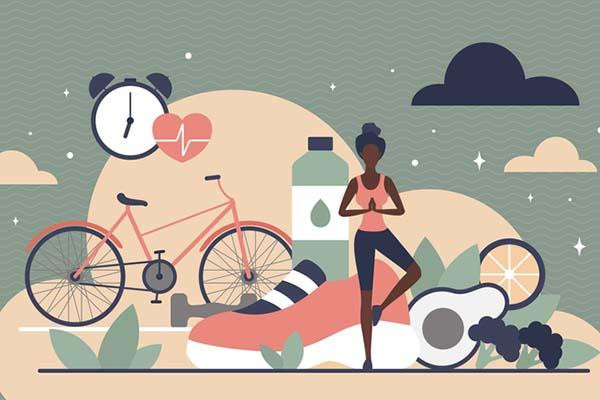
10 Healthy Habits That Can Improve Your Daily Life
Most people don’t need a complete life overhaul to feel better. They need a few dependable routines that fit into the day they already have: the commute, the work deadlines, the family dinner, the phone that never quite goes away.
This article covers ten healthy habits that are supported by health guidance and realistic for beginners. The advice is general and educational. If you have a medical condition, take regular medication, or are pregnant, adapt it with your doctor’s input.
A quick answer to the obvious question: no single habit on this list will transform your health alone. Together, practiced fairly consistently, they make up much of what public health organizations mean by a healthy lifestyle.
How to Use This List
Don’t try all ten at once. Pick one or two, run them for a few weeks, and add another only when the first feels automatic. Attaching a new habit to something you already do helps. Stretching while the tea brews is easier to remember than “stretch sometime today.”
Habits for Body and Energy
1. Keep a regular sleep schedule
Adults generally need at least seven hours of sleep a night, according to the CDC. Many people get less, and the gap shows up as poor concentration, irritability and cravings for sugary snacks.
Regularity matters as well as total hours. Going to bed and waking at roughly the same time, even on weekends, helps your body clock settle. If your hours are fixed by shift work or a long commute, protect the sleep window you do have rather than aiming for a textbook routine.
Practical steps:
- Set a target wake-up time first, then count back seven or more hours.
- Dim the lights and put the phone down about 30 minutes before bed. Late-night scrolling is one of the most common ways people lose sleep without noticing.
- If you often can’t sleep despite good habits, or you snore heavily and feel exhausted by day, talk to a doctor. Those can be signs of a sleep disorder.
2. Move your body most days
The World Health Organization recommends that adults do 150 to 300 minutes of moderate-intensity activity per week, or an equivalent amount of vigorous activity. It also recommends muscle-strengthening work on at least two days a week.
That sounds like a lot until you break it down. Thirty minutes of brisk walking on five days gets you to 150. Walking counts. So do cycling, dancing, swimming, playing with children, and climbing stairs.
If you’re starting from zero, begin with 10 minutes a day and add a little each week. Bodyweight exercises such as squats, wall push-ups and step-ups cover the strength side without a gym. Anyone with heart disease, joint problems or other health conditions should check with a doctor before starting something strenuous. Any movement beats none.
3. Build meals around whole foods
The WHO recommends eating at least 400 grams of fruit and vegetables daily (roughly five portions), plus legumes, nuts and whole grains. This is a more useful framing than chasing “superfoods”: a pattern of mostly minimally processed food does more than any single ingredient.
Familiar Indian options already fit this pattern: dal, rajma, chole, sprouts, seasonal sabzi, curd, roti made from whole grain flour, and a handful of peanuts or almonds. If you follow a different diet, the same idea works with beans, lentils, tofu, eggs, fish, salads, oats or brown rice, depending on what you eat and can afford.
A simple starting point is to add one vegetable or fruit to each meal rather than removing foods you enjoy.
4. Go easy on salt, sugar and ultra-processed snacks
The WHO suggests keeping salt below 5 grams a day (about a teaspoon) and keeping free sugars below 10 percent of total energy intake. Free sugars include sugar added to foods and drinks, plus those in honey, syrups and fruit juice.
In daily life, sweet drinks, packaged snacks, instant noodles, pickles, papad and some namkeen are the usual places salt and sugar accumulate. You don’t need to ban them. Notice how often they show up, and swap in alternatives such as roasted chana, fruit, or plain buttermilk when it’s easy.
5. Drink water, and make it your default drink
Needs vary with body size, climate, activity level and health conditions, so there is no single correct number of glasses. Your thirst and the colour of your urine (pale yellow is typical) are reasonable guides for most healthy people.
The more useful habit is choosing water, or unsweetened options like plain chaas or tea without much sugar, over sugary drinks. Keeping a bottle within reach is a practical way to do that. In very hot weather, during long exercise, or if you have kidney or heart problems, ask a doctor what suits you.
Habits for Mind and Routine
6. Break up long periods of sitting
Many of us sit for hours at a desk, then sit again in a vehicle or on the sofa. WHO guidelines recommend limiting sedentary time and note that replacing it with activity of any intensity brings benefits.
You don’t need a standing desk. Stand up every 30 to 60 minutes, take phone calls on your feet, walk to a colleague instead of messaging, or stretch your legs while waiting for something to load. These small interruptions add up across a week.
7. Give stress a regular outlet
Stress is a normal part of life, but constant stress can leave you feeling drained and worn down. Slow breathing, a short walk, journaling, prayer or meditation, time outdoors and talking with someone you trust are all reasonable ways to manage it.
The WHO has published a free guide, Doing What Matters in Times of Stress, with simple exercises such as grounding and slow breathing. These practices can help with everyday pressure. They aren’t treatment for depression or anxiety disorders. If low mood, constant worry or hopelessness lasts for weeks or interferes with daily life, speak to a doctor or mental health professional. If you are ever in crisis or thinking about harming yourself, contact local emergency services or a helpline in your country right away.
8. Stay connected to other people
Feeling connected to family, friends and community is closely tied to well-being, and loneliness is increasingly recognized as a public health concern. Evidence here largely comes from observational studies, so it’s hard to say how much is cause and how much is correlation. Even so, regular contact with people you care about is a low-cost habit with little downside.
It can be small: a weekly call with a relative, a walk with a neighbour, a shared meal. Quality counts for more than quantity.
9. Keep up with check-ups and screenings
Health habits aren’t only things you do at home. Blood pressure, blood sugar, cholesterol, vaccinations, vision, dental care and age-appropriate cancer screenings are worth checking on the schedule your doctor recommends.
Many conditions, such as high blood pressure and early diabetes, produce few symptoms at first, which is exactly why routine checks help. What’s appropriate depends on your age, sex, family history and local guidelines, so ask your doctor rather than relying on a generic list.
10. Avoid tobacco and keep alcohol low, or skip it
Tobacco in any form, including smoked and smokeless products, harms nearly every organ and is a leading preventable cause of disease worldwide, according to the WHO. Quitting at any age helps. Support such as counselling and nicotine replacement can improve your chances, and a doctor or local quit line can guide you.
On alcohol, the WHO states that no level of alcohol use is completely without health risk. If you already drink, less is safer than more. If you don’t drink, there is no health reason to start.
What Healthy Habits Can’t Do
It helps to be realistic. Habits lower risk and improve how you feel day to day, but they can’t guarantee you will avoid illness. Genetics, environment, income, access to healthcare and bad luck all play a part.
Habits also take time. You might notice better energy from improved sleep within a couple of weeks, but changes in fitness or blood markers often take months, and results vary widely between people.
And don’t treat a missed day as a failure. One skipped workout or late night doesn’t undo your progress. What matters is returning to the routine.

Common Mistakes to Avoid
- Changing everything at once. It feels motivating for a week, then collapses.
- Setting vague goals. “Eat healthier” is hard to act on. “Add a vegetable to lunch” isn’t.
- Copying someone else’s routine. A plan built for a gym-goer in a city may not suit your job, budget or family life.
- Relying on supplements to make up for poor habits. Most healthy adults don’t need them, and some interact with medications. Ask a doctor or registered dietitian before starting any.
- Ignoring symptoms because the habits are “good.” Chest pain, unexplained weight loss, persistent fatigue or breathlessness should be checked, not self-managed.
A Sample Day for a Busy Beginner
This is one possible example, not a prescription:
- Morning: Wake at a consistent time, drink a glass of water, and walk for 10 minutes.
- Breakfast: Poha with vegetables and peanuts, or oats with fruit and nuts, or eggs with whole-grain toast.
- Workday: Stand and stretch every hour. Take a short walk after lunch.
- Lunch and dinner: Roti or rice with dal, a vegetable and curd, or an equivalent in your own diet.
- Evening: Spend 10 minutes on stress relief such as slow breathing or a call with a friend.
- Night: Dim the lights, put the phone away, and go to bed at your target time.
FAQs
How long does it take to build a healthy habit?
There is no fixed number. Research on habit formation suggests it varies widely between people and behaviours, often taking weeks to months. Keep the habit small enough to repeat easily and focus on consistency.
Which healthy habit should I start with first?
Pick the one that feels easiest to start and that you’d most like to change. For many people, that’s sleep timing or a daily walk, since both improve energy and make other changes easier.
Do I need a gym membership or special equipment?
No. Walking, stair climbing, bodyweight exercises and household activity can meet general guidelines. A gym can help if you enjoy it, but it isn’t required.
Is it okay to eat my favourite foods and still be healthy?
Yes. Overall patterns matter more than individual foods. Treats can fit into a balanced diet, though you may want to watch portions and frequency if you have a condition such as diabetes or high blood pressure.
What if I miss a few days?
Restart without guilt. Gaps are normal. Make the habit smaller if needed, such as a 5-minute walk instead of 30 minutes, and rebuild from there.
When should I see a doctor instead of relying on habits?
See one if you have ongoing symptoms, a chronic condition, a family history of serious disease, or you’re planning a major change in diet or exercise. A doctor can also tell you which screenings suit your age and risk factors.
Conclusion
Healthy habits work because they accumulate. Sleeping regularly, moving daily, eating mostly whole foods, managing stress, staying connected and attending check-ups each contribute modestly. Together they shape how you feel and how your health holds up over time.
For next steps, pick one habit from this list and tie it to something you already do each day. After a few weeks, add a second. The aim isn’t a perfect routine. It’s a routine you can actually keep.