
Written by Teerth Busa: Health & Fitness Content Writer
Teerth Busa researches exercise, fitness, nutrition, mental well-being, and healthy lifestyle topics using reputable health organizations and scientific sources. His content is written to make health and fitness information simple, practical, and easy to understand.
How to Take a Break From Your Phone Without Feeling Bored
You put the phone down, and within a minute your hand is reaching for it again. Nothing important is happening on the screen. The urge is simply there, and the gap it leaves feels oddly empty.
That reaction is common, and it doesn’t mean you’re weak or addicted. A break from your phone feels boring because the phone has been filling small moments, such as waiting, travelling, eating and winding down, that your mind now expects to be filled. The most reliable fix is not to white-knuckle through the boredom. It is to decide in advance what will take the phone’s place, and to start with short, specific breaks rather than a dramatic “digital detox.”
This article explains why the boredom happens, what research does and doesn’t say about taking a break, and how to build phone-free time that fits an ordinary day.
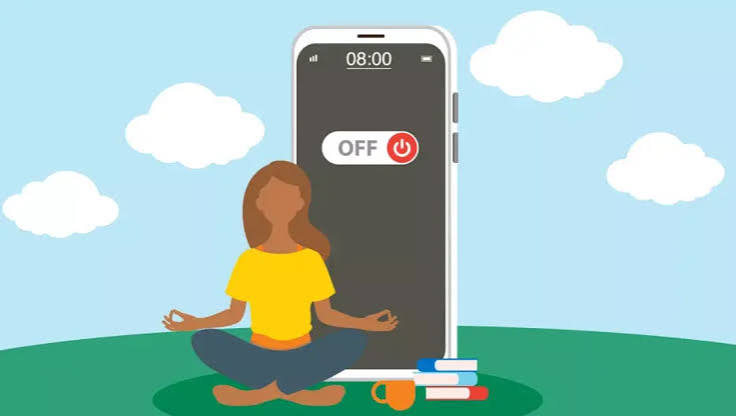
Key Takeaways
- The discomfort you feel in the first few minutes is normal. It is largely about losing an easy source of stimulation, not a sign that the break isn’t working.
- Reducing use, rather than quitting completely, has some experimental support for better mood in young adults, though the evidence is limited.
- Replacing the phone with a specific, easy alternative works better than relying on willpower.
- Starting with one or two phone-free windows, such as meals or the last half hour before bed, is more sustainable than an all-day ban.
- Phone use that feels out of control, or that is tied to low mood or anxiety, is worth discussing with a qualified professional.
Why a Break From Your Phone Feels Boring
A phone is a very efficient way to avoid having nothing to do. Queue at the bank, a slow lift, an ad break, a bus stop: each used to be a small pocket of empty time, and each can now be filled in half a second.
Psychologists have studied how people react when that option is removed. In a set of 11 studies published in Science in 2014, participants typically did not enjoy spending 6 to 15 minutes alone with nothing to do but think, and they enjoyed ordinary external activities much more. Some chose to give themselves a mild electric shock instead of sitting quietly.
It’s worth reading that result with care. Other researchers have published commentaries arguing that the data support a more modest conclusion, and that most participants in fact preferred thinking to receiving a shock. The sensible reading is a limited one: many people find unstructured, empty time uncomfortable at first, especially when it is imposed in an unfamiliar setting. That fits everyday experience. It doesn’t mean your mind is broken, and it doesn’t mean the discomfort will last.
Two things tend to be mixed up here:
- Boredom: a flat, restless feeling when nothing engages you.
- The urge to check: a habit-driven pull toward the phone, which can show up even when you aren’t bored at all.
You can usually tell them apart. If you reach for the phone mid-conversation or while doing something you enjoy, it’s the habit, not boredom. The two need slightly different fixes, which the sections below cover.
What the Evidence Says About Taking a Break
It helps to know what’s actually been shown before deciding how strict to be.
Cutting back may help mood, with caveats. In a three-week experiment at the University of Pennsylvania, college students who were randomly assigned to limit Facebook, Instagram and Snapchat to about 10 minutes per platform per day showed significant reductions in loneliness and depression compared with a group that carried on as usual. Both groups reported less anxiety and fear of missing out, which the researchers suggested may partly come from simply paying attention to their own usage.
The limits of that study matter. The participants were 18 to 22-year-olds at one university, the study ran for three weeks, and the improvements were most pronounced in people who started out more depressed. The researchers deliberately did not ask for total abstinence, partly because they viewed it as unrealistic. The study doesn’t show that a break will improve everyone’s mood, and it says nothing about older adults, teenagers or people who use phones mainly for work.
Late-night phone use is linked to worse sleep. A study that tracked actual smartphone screen time in 653 US adults over 30 days found that longer screen time around bedtime was associated with poorer sleep quality and less sleep overall (Christensen et al., 2016). It was observational, which means it can’t prove the phone caused the poor sleep. People who sleep badly may also reach for their phones more. Still, it gives a practical reason to try a phone-free stretch at night.
So the honest summary is this: a break from your phone is low-risk and plausibly helpful, especially around sleep and passive scrolling, but it is not a proven cure for anything.
Before You Start: Decide What You’re Actually Trying to Change
“Use my phone less” is too vague to act on. Spend a day or two noticing, without judging, when you pick the phone up. Most people find a few repeating patterns:
- Filling gaps: waiting, commuting, queuing.
- Avoiding a task: opening an app instead of starting something difficult.
- Winding down: scrolling in bed or after dinner.
- Reflex checking: unlocking it with no purpose at all.
Your phone’s built-in screen-time report can show which apps take the most time. It’s a useful guide, but how you feel afterwards tells you more than the number of minutes. Time spent video-calling family and time spent on endless short videos are not the same thing.
Ways to Take a Break From Your Phone Without Getting Bored
Start small and specific
An all-day ban is the fastest route to giving up by lunchtime. Pick one or two windows instead:
- the first 20 to 30 minutes after waking
- mealtimes
- the walk or commute to a regular place
- the last 30 minutes before bed
Choose the window where the phone is least necessary and most habitual. Try it for a week before adding more.
Make the phone slightly harder to reach
Willpower is unreliable; distance isn’t. Leave the phone in another room while you eat, charge it outside the bedroom, or put it in a bag during a walk. Turning off non-essential notifications removes many of the nudges that start a scrolling session in the first place. These small barriers help with the reflex-checking pattern, since the habit often fades when the action takes real effort.
Prepare the replacement before you need it
Boredom bites hardest when you have to invent an alternative on the spot. So decide beforehand. A few ideas, matched to the moments they suit:
For gaps and waiting
- Carry a paperback, a small notebook or a puzzle book.
- Watch what’s around you, people, traffic, the sky. It sounds dull until you try it for five minutes.
For restless evenings
- Cook something from scratch, even a simple khichdi or a new sabzi.
- Play carrom, cards or ludo with family, or a board game if you live alone and have a friend nearby.
- Pick up a hands-on hobby such as sketching, rangoli, knitting, a jigsaw or learning a few chords.
For low-energy moments
- Listen to a radio programme, an audiobook or music without looking at the screen. Many people find this easier than silence because it still occupies the mind.
- Stretch or do light yoga.
For breaks at work or study
- Step outside for a short walk, or stand by a window with a cup of chai or water.
- Chat with a colleague or classmate.
Notice that many of these still involve doing something. That’s deliberate. The research above suggests that complete emptiness is the hardest version of a break. Trading an app for another engaging activity is usually far easier than trading it for nothing.
Let a little boredom happen on purpose
Once the replacements feel comfortable, try short stretches of doing nothing in particular, for instance five minutes on the balcony or on the bus without headphones. Wilson’s team found a small link between meditation experience and being able to enjoy one’s own thoughts, and they suggested practice might help, though this is a suggestion, not a settled finding. Treat it as an experiment rather than a requirement. Plenty of people get what they need from the activity-based swaps above.
Plan for the fear of missing something
A common reason people give up is worry about missed messages. A few practical fixes:
- Tell close family or friends your phone-free windows, and how to reach you urgently, by call rather than text.
- Allow calls and messages from a short list of people.
- Check messages at set times, such as after lunch and early evening, instead of constantly.
Your phone may also be tied to responsibilities: work, caring for a relative, banking, or a parent’s medical needs. Not everyone can switch off for hours, and that’s fine. A smaller window you can keep beats a bigger one you can’t.

Common Mistakes
- Going cold turkey on day one. It usually backfires. Build up gradually.
- Replacing one screen with another. Switching from your phone to a tablet or TV scroll doesn’t meet the goal, unless what you’re really after is just less social media.
- Treating a slip as failure. If you grab your phone during a window, notice it, and carry on. One lapse doesn’t cancel the rest.
- Using the break to punish yourself. Guilt tends to make people avoid the issue instead of changing it.
- Expecting instant calm. The first few days are often the most awkward. Many people report that it eases, but that’s anecdotal, and your experience may differ.
When a Break Isn’t Enough
Occasionally, phone habits are a symptom of something else. It may be worth speaking to a doctor, counsellor or other qualified professional if:
- you feel unable to cut back even though it’s damaging your work, relationships or sleep
- you feel intense anxiety, irritability or low mood when you can’t use your phone
- you use the phone mainly to escape persistent sadness, worry or loneliness
- you’re a parent worried about a child’s usage that seems out of control
This article gives general information. It can’t diagnose anything or replace personalised advice.
FAQs
How long should a break from my phone last?
There’s no proven ideal length. A useful starting point is a short daily window, around 30 minutes, kept for a week or two. The Penn study ran three weeks, but it tested reduced use on social media, not a specific break duration, so treat any number as a starting point.
Is it normal to feel anxious when I put my phone away?
Mild restlessness is common at first. If it’s intense, lasts, or comes with low mood or panic, consider talking to a health professional.
Do I have to delete social media apps?
No. Many people do better by logging out, moving the apps off the home screen, or setting a time limit. Deleting is an option if you want a stronger barrier, and you can reinstall later.
Will a phone-free hour before bed really improve my sleep?
It might, but the evidence is mostly observational, so it can’t promise a result. It costs nothing to test over a couple of weeks and see whether you fall asleep more easily.
What if my job needs me to be reachable?
Keep the phone available but reduce what you do on it. Silence everything except calls from key people, and protect small windows such as mealtimes.
Is boredom actually bad for me?
Not inherently. It’s an uncomfortable but ordinary feeling. The aim isn’t to eliminate it, only to avoid reaching for the phone every time it appears.
Conclusion
A break from your phone feels boring mostly because the phone has quietly taken over every spare moment. Taking it back works better when you start small, make the phone a little harder to reach, and line up something easy to do in its place. The research suggests cutting back can help mood and sleep for some people, but the evidence is limited and no single break will fix everything.
For your next step, choose one window this week, perhaps dinner or the half hour before bed, and decide today what you’ll do during it. If it feels manageable after a week, add a second.