
Written by Vardan Patel
Co-Creator & Health and Fitness Content Creator at FitHub 365
Vardan combines his personal experience with exercise and healthy lifestyle habits with research from reputable health organizations and scientific sources to create practical, beginner-friendly health and fitness content.
Key takeaways
- Fine particles (PM2.5) are the pollutant with the strongest evidence for harming the heart. The AHA’s expert panel considers the relationship causal.
- Breathing polluted air for a few hours or days can trigger problems. Years of exposure add further risk.
- People with existing heart disease, older adults and possibly people with diabetes appear more vulnerable.
- Indoor air counts too. Cooking smoke and other household sources contribute to heart-related deaths worldwide.
- A HEPA air purifier at home and a well-fitting N95-type respirator on bad days have the best evidence among personal measures. Cloth and simple surgical masks are less clear.
How Air Pollution Affects Heart Health
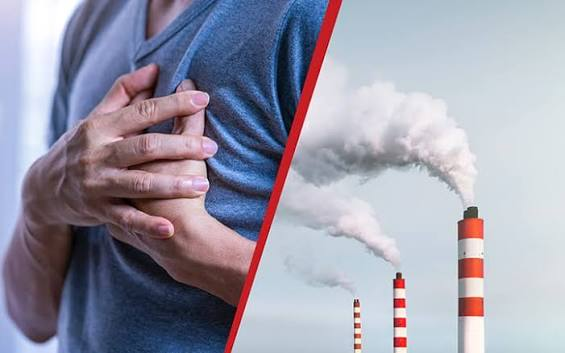
Most of us think of smog as a lung problem. A cough, a sore throat, a tight chest on a hazy morning. It’s less obvious that the same air can raise the risk of a heart attack or stroke.
The link is real, and it’s one of the stronger findings in environmental health. Almost 70% of the 4.2 million deaths attributed to outdoor air pollution in 2019 were caused by cardiovascular conditions, including 1.9 million from ischaemic heart disease and 900,000 from stroke. Those figures are estimates from large modelling exercises, not counts of individual cases. They still show where the main burden falls. world-heart-federation
This article explains which pollutants matter, how they may harm the heart, who is most at risk, and what ordinary people can do about it, including readers in cities where clean air isn’t a choice.
What “air pollution” actually means
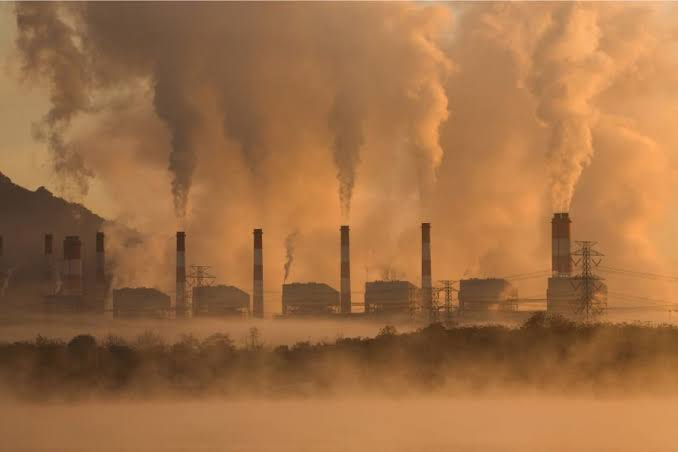
Air pollution is a mixture of gases, liquids and tiny solid particles. The ones health researchers focus on include particulate matter, nitrogen dioxide, ozone, sulphur dioxide and carbon monoxide.
The most studied for heart health is PM2.5, particles 2.5 micrometres or smaller across. That’s thin enough to travel deep into the lungs. They come from vehicle exhaust, industrial emissions, construction dust, crop and waste burning, and the burning of wood, dung or coal for cooking and heating.
Ambient pollution is outdoor air. Household pollution is what builds up indoors, mostly from cooking and heating with solid fuels. Both count. Among the 3.2 million deaths attributed to household air pollution in 2019, 53% were due to cardiovascular disease. healthpolicy-watch
How polluted air may reach the heart
Researchers haven’t fully mapped every step, and the details are still debated. The broad picture, as described in AHA scientific statements, is that inhaled particles don’t stay in the lungs. They can trigger inflammation and oxidative stress, affect blood vessel function, and disturb the nervous system’s control of heart rhythm. Together these may make the blood more likely to clot and artery plaques more likely to become unstable. A plaque that ruptures can cause a heart attack or stroke.
Think of it as a push on a system that’s already under strain. In someone with healthy arteries, the push may do little. In someone with narrowed arteries, high blood pressure or an unstable plaque, it may matter a great deal.

What the evidence supports
PM2.5 and heart disease
In its 2010 update, the AHA’s expert writing group concluded that the overall evidence is consistent with a causal relationship between PM2.5 exposure and cardiovascular illness and death. The group also described PM2.5 as a modifiable factor, meaning it can be reduced. Their summary rated the evidence as strong for ischaemic heart disease, moderate but growing for heart failure and ischaemic stroke, and more modest for irregular heartbeats and cardiac arrest. cdcohsonline
A 2020 AHA statement went further, noting that evidence since 2010 has documented the causal role of fine particle pollution in cardiovascular disease. heart
Short-term and long-term exposure
Both matter, in different ways. Even a few hours or days of PM2.5 exposure can trigger cardiovascular events, according to the AHA fact sheet. The 2010 statement describes a “small yet consistent” link between short-term exposure and premature death. Longer exposure, over a few years, can produce an even larger increase in these health risks. lincolntown.org +2
That is why a smoky week after Diwali, a stubble-burning season or a wildfire can be a concern for people with heart conditions, even though the sky clears afterwards.
Is there a “safe” level?
Researchers generally don’t identify a clean threshold below which risk disappears. The WHO tightened its guidelines in 2021 for this reason. It now recommends keeping PM2.5 under 5 µg/m³ as an annual average, and 15 µg/m³ over 24 hours. Those are targets, not a promise of zero risk. Most large cities worldwide exceed them. dieselnet
Who is more vulnerable
The AHA panel found that older adults and people with existing heart disease, such as heart failure or coronary artery disease, appear to be at higher risk from short-term exposure, and perhaps people with diabetes too. manufacturing
Other groups often mentioned in public health work include people with high blood pressure, high cholesterol or a history of stroke, and those who work or exercise outdoors in busy traffic, such as delivery riders, traffic police and street vendors. Those workers can’t easily “stay indoors on bad days,” which is a point worth keeping in mind when reading advice that assumes people can.

A caution on the Indian numbers
India has some of the world’s highest PM2.5 exposure. A 2020 State of Global Air country profile reported that the whole population lives in areas above the WHO guideline level in force at that time. stateofglobalair
But the evidence on exact death counts isn’t settled. A nationwide study analysing more than 200,000 deaths in adults aged 15 to 69 found a nine per cent higher risk of stroke death for each 10 µg/m³ increase in PM2.5, but no excess risk for heart disease or for overall deaths once stroke was excluded. The authors stressed that this doesn’t mean pollution is harmless. One of them said reducing PM2.5 exposure is still necessary. utorontoutoronto
The takeaway is that estimates differ depending on method, and that high-income-country findings don’t always transfer neatly to India. Treat any single headline number, in either direction, with some caution.
What you can realistically do
The AHA’s 2020 statement says personal measures should be practical, safe and low or no cost, matched to a person’s risk and exposure, and feasible to apply fairly. The honest caveat is that for many of these steps the health evidence is still limited. They reduce exposure. Whether they prevent heart attacks is less well tested. heart
At home
Air purifiers. A review of the research found that HEPA filter purifiers used over days to weeks can substantially lower indoor PM2.5 and improve subclinical heart and lung health. “Subclinical” means measurable markers, not proven fewer heart attacks. The same review warned that marketing claims often exaggerate the scientific evidence. Look for HEPA filtration and a size suited to the room. A purifier in the bedroom, where you spend about a third of your day, is a sensible place to start. nihspringer

Cooking smoke. If you cook on wood, dung, coal or kerosene, switching to a cleaner fuel or improving ventilation can lower exposure. Where that isn’t affordable, a chimney, an outlet fan, or cooking with a window open helps somewhat. Government clean-fuel schemes may be worth checking if you qualify.
Other indoor sources. Incense, mosquito coils and indoor burning add particles. Open windows when outdoor air is reasonably clean, and keep them closed during heavy pollution peaks.
Outdoors
Check the air quality before you go. Use a reputable AQI app or your city’s official monitoring. On very poor days, consider moving a run or walk indoors, shortening it, or choosing a quieter route, since air along busy roads is typically worse than in parks or side streets. Early-morning air isn’t always cleaner, as winter inversions can trap pollution close to the ground. Check the actual reading.
Don’t skip exercise altogether. Physical activity is one of the best things for the heart, and for most people the benefits outweigh the risks of moderate exercise in moderately polluted air. The sensible approach is adjusting where and when, not stopping. People with heart disease should ask their doctor what level of pollution should change their plans.
Masks: what the evidence says
This is where many people get confused.
- Well-fitting N95-type respirators (including KN95/FFP2 equivalents) can reduce PM2.5 exposure, and several randomised crossover studies reported improvements in subclinical cardiovascular health. Fit matters. A loose mask that leaks at the sides protects much less. nih
- Simple cloth or surgical masks: the AHA said clinical evidence is currently insufficient to either support or advise against them for PM2.5 protection. In other words, no one can promise they help. heart
- Respirators can be uncomfortable, especially in heat, and people with breathing or heart conditions should check with their doctor before wearing one for long periods.
Treat the risk factors you can control
The AHA statement also advised that treating traditional cardiovascular risk factors may lessen a person’s susceptibility to air pollution. That means blood pressure, cholesterol, blood sugar, smoking, and regular movement. These aren’t glamorous, but they may be the most reliable way to make your heart more resilient, whatever the air is like. kark
What this evidence doesn’t tell us
- Individual risk. A population-level link doesn’t predict whether one person will have a heart attack. Genetics, smoking, diet, activity and existing conditions all interact with pollution.
- Which component does the harm. PM2.5 has the strongest evidence, but mixtures of pollutants are hard to separate. The World Heart Federation notes that death estimates currently count only one pollutant (PM2.5) and only two heart conditions, so the real number is likely higher. healthpolicy-watch
- Whether personal measures prevent events. Evidence for improved blood-vessel and blood-pressure markers is better than evidence for fewer heart attacks.
- Quick fixes. No food, supplement or “detox” has been shown to cancel out pollution damage. Be cautious about products that claim otherwise.
When to see a doctor
Seek urgent medical help for chest pain or pressure, pain spreading to the arm, jaw or back, sudden breathlessness, fainting, or signs of a stroke such as facial drooping, arm weakness or slurred speech. Don’t wait for the air to clear.
Talk to your doctor if you have heart disease, high blood pressure, diabetes, or are an older adult living in a heavily polluted area, and ask how pollution should affect your exercise, medication routine and mask or purifier decisions. This article is general information, not personal medical advice.
FAQs
Can air pollution really cause a heart attack?
It can contribute to the risk. The AHA considers the link between PM2.5 and cardiovascular illness causal, but pollution is rarely the only factor. It tends to add to existing risks such as artery disease, high blood pressure and smoking.
Is indoor air pollution as harmful as outdoor?
Both are linked to cardiovascular disease. Household pollution from solid-fuel cooking is a major contributor globally, particularly in low-income settings.
Should I stop exercising outside when the AQI is bad?
Not necessarily forever, but it’s reasonable to reduce intensity, shorten sessions, move indoors or choose a lower-traffic route on very poor days. If you have heart disease, ask your doctor for personal thresholds.
Do cloth masks protect my heart?
The evidence isn’t clear either way. A properly fitted N95-type respirator has better evidence for reducing exposure.
Do air purifiers work?
HEPA purifiers reliably reduce indoor PM2.5 and may improve some heart-health markers. They won’t remove pollution from outdoor air, and results depend on room size, filter quality and keeping windows closed.
Does moving to a cleaner area undo the risk?
The research suggests lowering exposure reduces risk over time, but how quickly and how completely varies by person. It’s not a guaranteed reset.
Conclusion
Air pollution is not only a lung issue. Fine particles are now accepted as a real contributor to heart attacks, strokes and heart-related deaths, with the largest risks falling on older adults and people with existing heart conditions.
You can’t personally clean a city’s air, but you can reduce your exposure and strengthen your heart. Start with two things: check local air quality before outdoor exercise, and look after the basics your doctor tracks, such as blood pressure, cholesterol and blood sugar. If you live in a high-pollution area, a bedroom HEPA purifier and a well-fitting respirator for the worst days are the best-supported extras.